
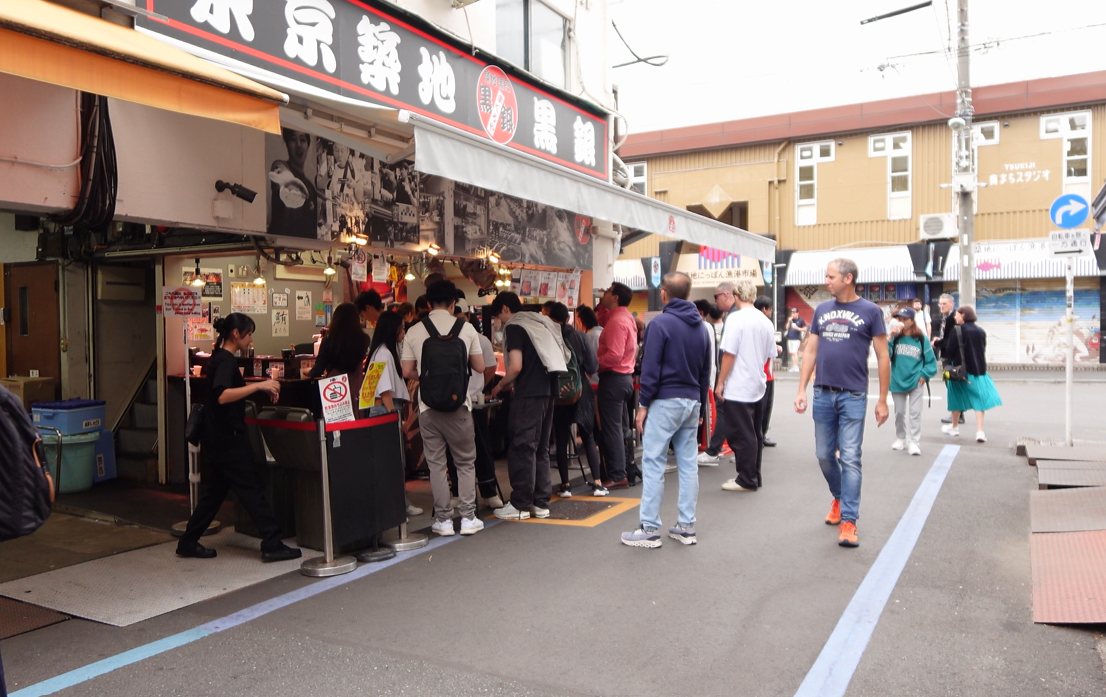
Today, Ian and I visited the famous Tsukiji Market, a place that never fails to excite us no matter how many times we’ve been. Yes, we’ve heard all the whispers about it being a tourist trap—but we honestly don’t care. The food is just too good to pass up! For seafood lovers like us, Tsukiji is a must-visit every time we’re in Tokyo. What keeps us coming back? The buzzing energy, the ridiculously fresh seafood, and the fact that I can indulge in my ultimate obsession: uni (sea urchin).
Why Is Tsukiji Market So Famous?
Tsukiji Market, often referred to as the “Kitchen of Tokyo,” has a history dating back to 1935. It originally served as the city’s largest wholesale seafood market, a bustling hub where fishermen, chefs, and locals gathered daily. The market became legendary for its massive tuna auctions and staggering variety of fresh seafood, cementing its place as a cornerstone of Tokyo’s culinary culture.
In 2018, the wholesale operations moved to Toyosu Market, a modern facility designed to meet the city’s growing needs. However, the outer market—the heart and soul of Tsukiji—remained, with its narrow alleys packed with vendors, shops, and restaurants. This preserved the market’s old-school charm, making it a magnet for both locals and tourists.
How Did Tsukiji Become a Global Phenomenon?
Several factors contributed to Tsukiji’s rise to fame:
- Media Exposure: Tsukiji became a favorite subject in travel guides and food shows, attracting millions of visitors eager to experience its legendary seafood and vibrant energy.
- Foodie Culture: As food tourism grew, travelers couldn’t resist the allure of dishes like buttery otoro (fatty tuna) and sweet tamago sticks.
- Convenient Location: Nestled in the heart of Tokyo, Tsukiji was an easy stop for anyone exploring the city.
While its charm is undeniable, Tsukiji has also gained a reputation as a tourist hotspot. Crowds and commercialization can sometimes overshadow the experience, but for seafood lovers like us, it’s still worth the visit.
Getting to Tsukiji Market
Planning your visit to Tsukiji? Here’s how to get there from Tokyo’s most popular tourist areas:
From Shinjuku (Popular for First-Time Visitors)
- 🚇 By Subway: Take the Oedo Line directly to Tsukiji Shijo Station
- Journey Time: 20 minutes
- Cost: ¥280 ($2.80 CAD)
- 🚕 By Taxi:
- Journey Time: 20-25 minutes
- Approximate Cost: ¥7,000 ($70 CAD)
From Tokyo Station (Business & Culture Hub)
- 🚇 By Subway: Take Marunouchi Line, transfer to Hibiya Line
- Journey Time: 6 minutes
- Cost: ¥180 ($1.80 CAD)
- 🚕 By Taxi:
- Journey Time: 3-5 minutes
- Approximate Cost: ¥2,000 ($20 CAD)
From Shibuya (Shopping & Entertainment District)
- 🚇 By Subway: Take Ginza Line, transfer to Hibiya Line
- Journey Time: 25 minutes
- Cost: ¥280 ($2.80 CAD)
- 🚕 By Taxi:
- Journey Time: 15-20 minutes
- Approximate Cost: ¥4,500 ($45 CAD)
💡 Pro Tip: While taxis are convenient, the subway is significantly more cost-effective and often faster during rush hour. Most stations have English signage, making navigation straightforward for international visitors.
Starting the Day Early
We learned our lesson last time when we made the mistake of showing up close to New Year’s Eve at 11 AM. The market was PACKED. I’m talking wall-to-wall people, being pushed around like sardines. If you’re claustrophobic or just hate crowds, this is not the vibe. This time, we got there bright and early—around 7:30 AM. It was perfect. No crowds, no lines, and we could actually enjoy walking around without feeling like we were in a mosh pit. By 8:30 AM, the lines were already starting to form, so if you want a stress-free experience, skip the beauty sleep and head out early. Trust me, it’s worth it.
What We Ate at Tsukiji Market (With Honest Ratings)

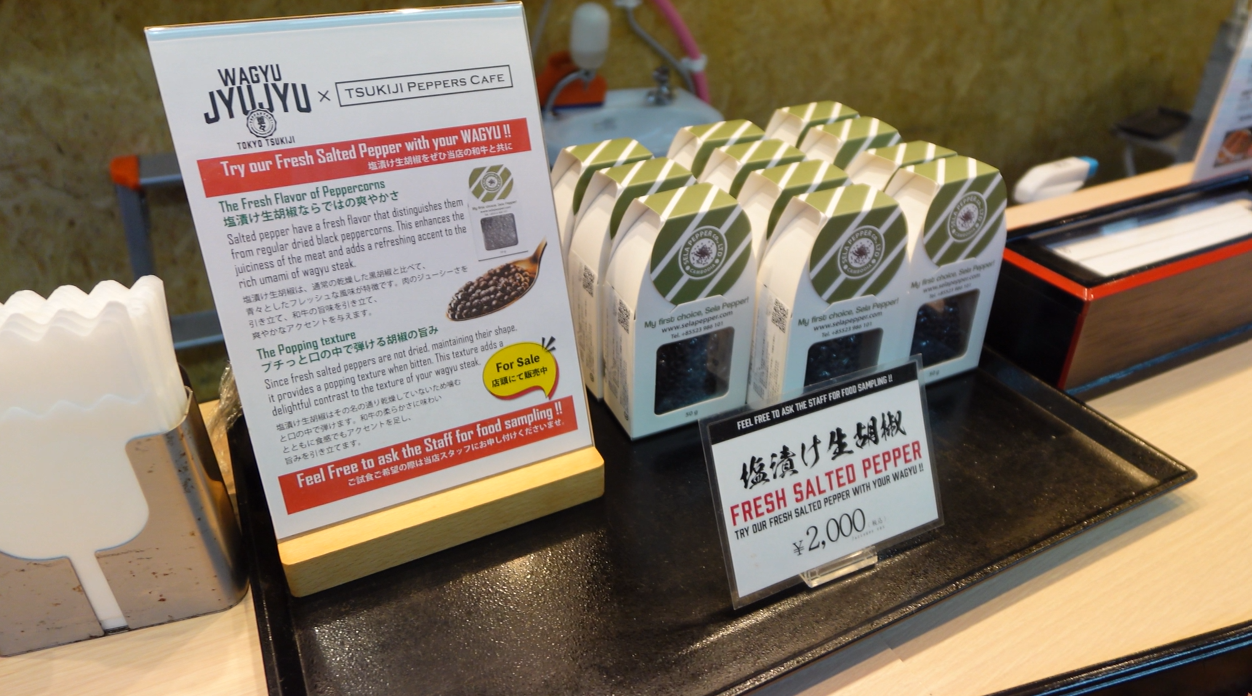

1. Wagyu Uni Skewer
💵 Price: 70,000 yen (~$70 CAD)
⭐ Rating: 4/5
The wagyu uni skewer was the most anticipated dish of the day, and it didn’t disappoint—at least at first. The wagyu was perfectly marbled, grilled medium-rare with that beautiful char, and then topped with creamy, rich uni. The first bite was incredible. The fattiness of the wagyu and the buttery texture of the uni blended like a dream.
But… by the second bite, it became too much. The richness of both ingredients together was overwhelming, and I started feeling nauseous. Even though Ian and I shared one skewer, it was still a bit much for the first meal of the day.
Oh, and here’s the kicker—we forgot to record it. Yup, classic vlogger mistake. We were so excited that we thought we hit record, but nope. So, naturally, we had to make up for it by eating more delicious food!


2. Tuna Sashimi Trio
💵 Price: 7,000 yen (~$70 CAD)
⭐ Rating: 5/5
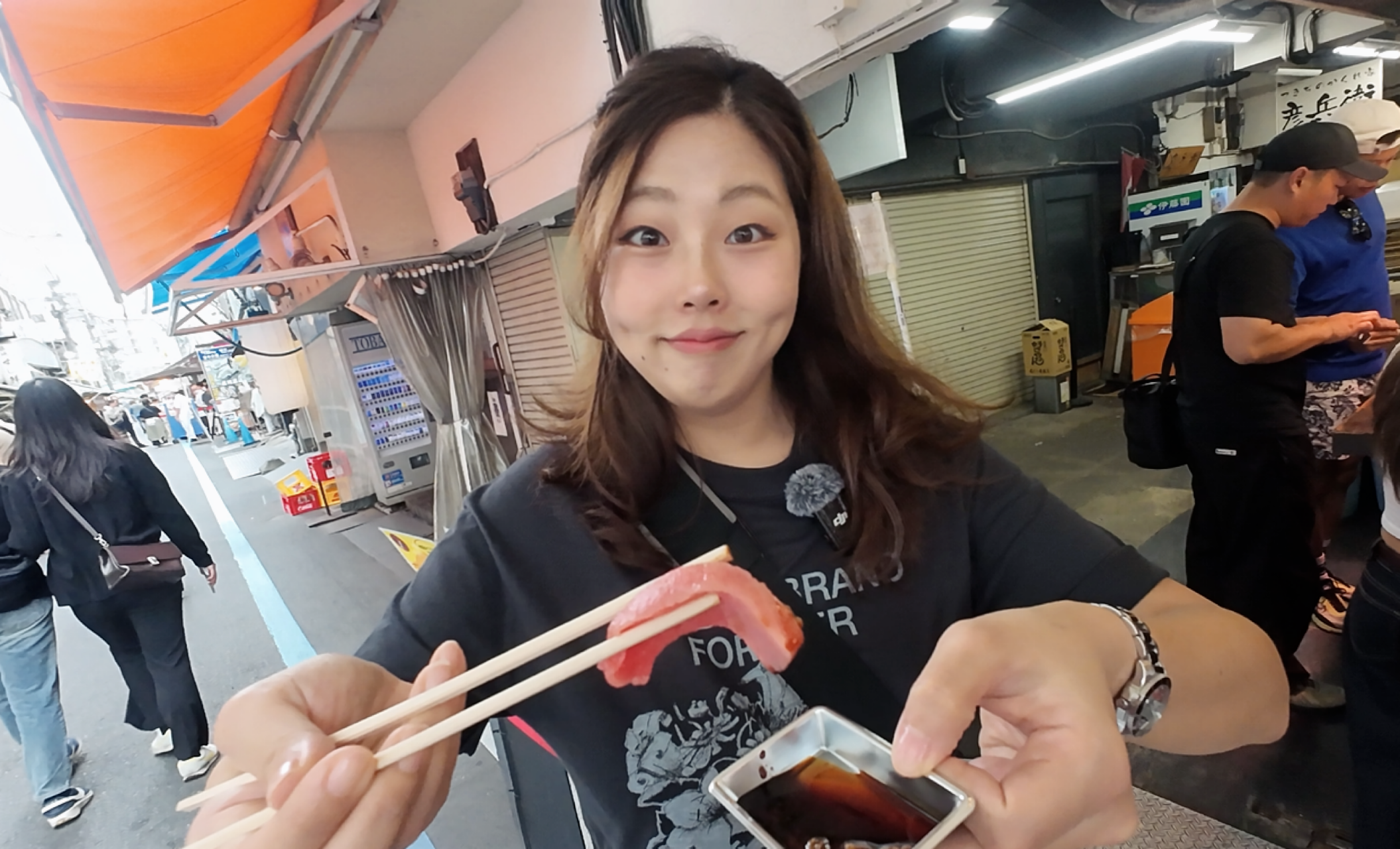
Next up was the tuna sashimi trio, and wow, this was worth every penny. The set included three premium cuts:
- Kamatoro (neck): The rarest and fattiest cut, only 0.5% of the tuna.
- Otoro (belly): Known for its melt-in-your-mouth texture.
- Chutoro (belly): A perfect balance of lean and fatty meat.
We started with the least fatty (chutoro) and worked our way up to the kamatoro. Each piece literally melted in my mouth. Normally, I’m not a huge tuna fan because it can taste too fishy, but this? It was next-level fresh. If I wasn’t already stuffed from the wagyu uni skewer, I could have easily eaten an entire set by myself. You can see how happy I am at the end as I try the Kamatoro. If you love sashimi, this place is a must try!!
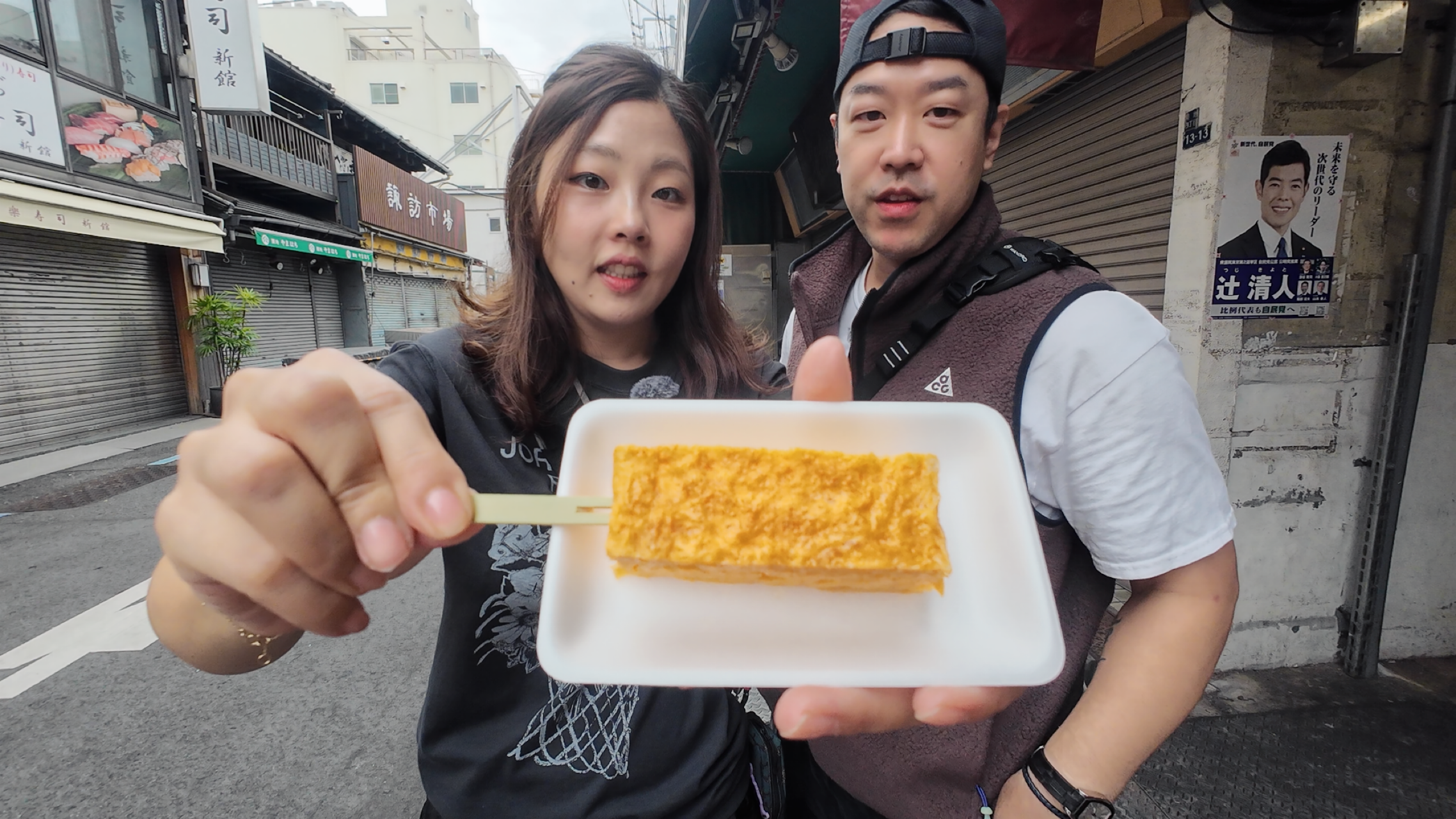
3. Tamago Stick
💵 Price: 200 yen (~$2 CAD)
⭐ Rating: 2/5
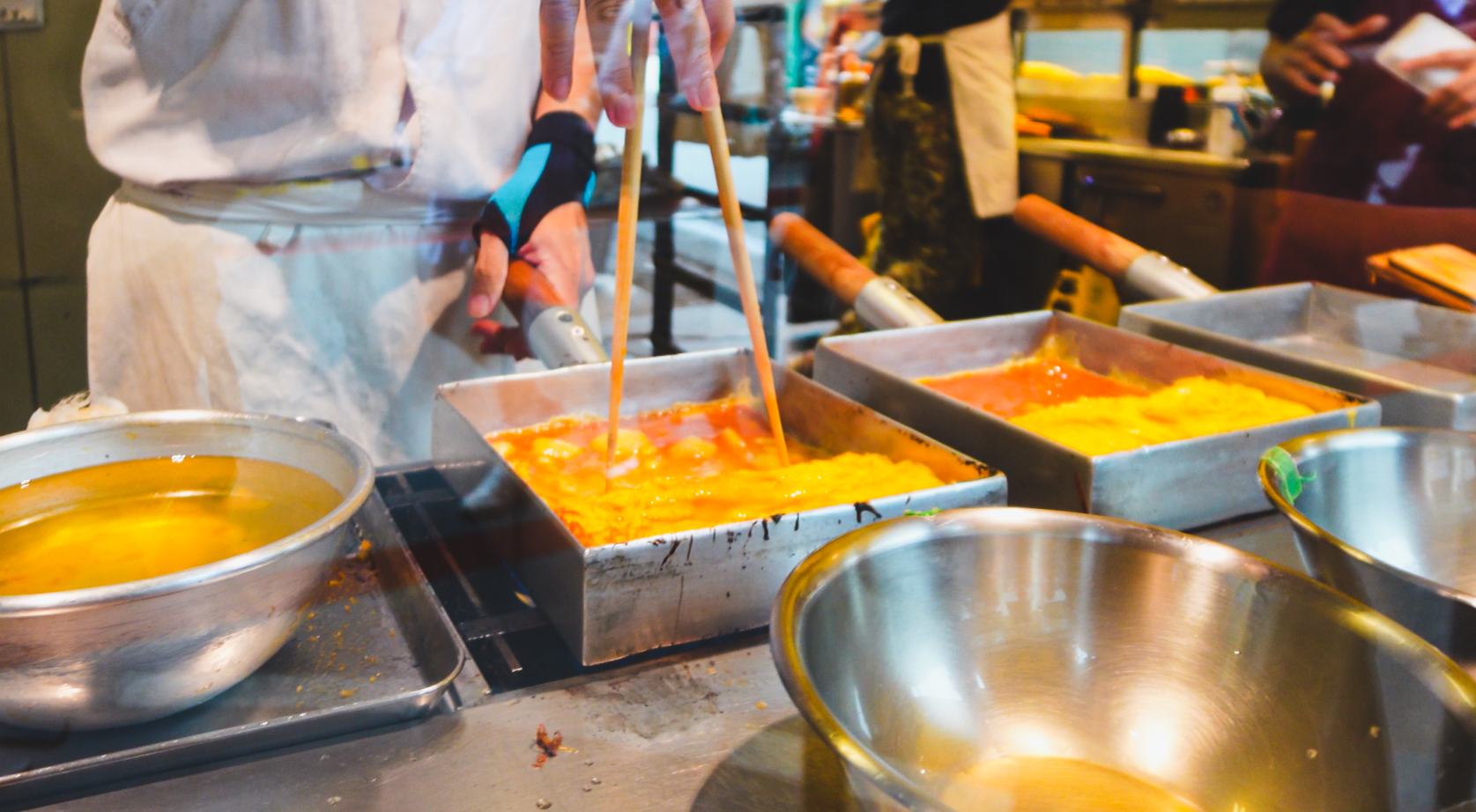
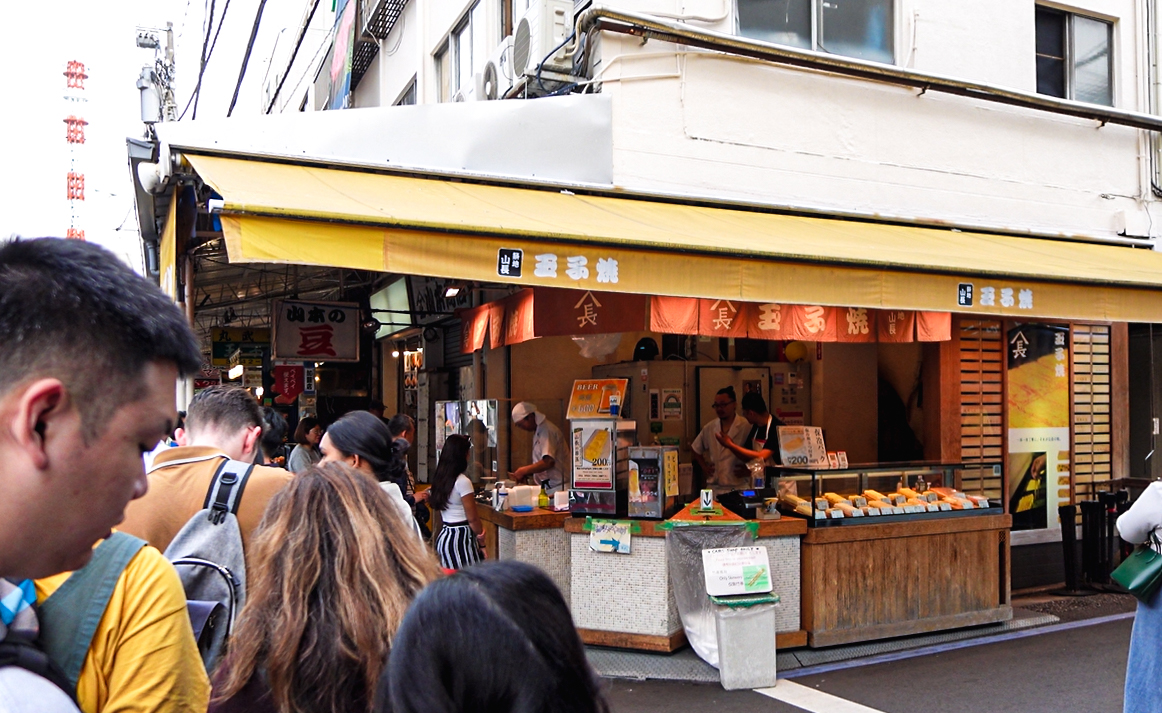
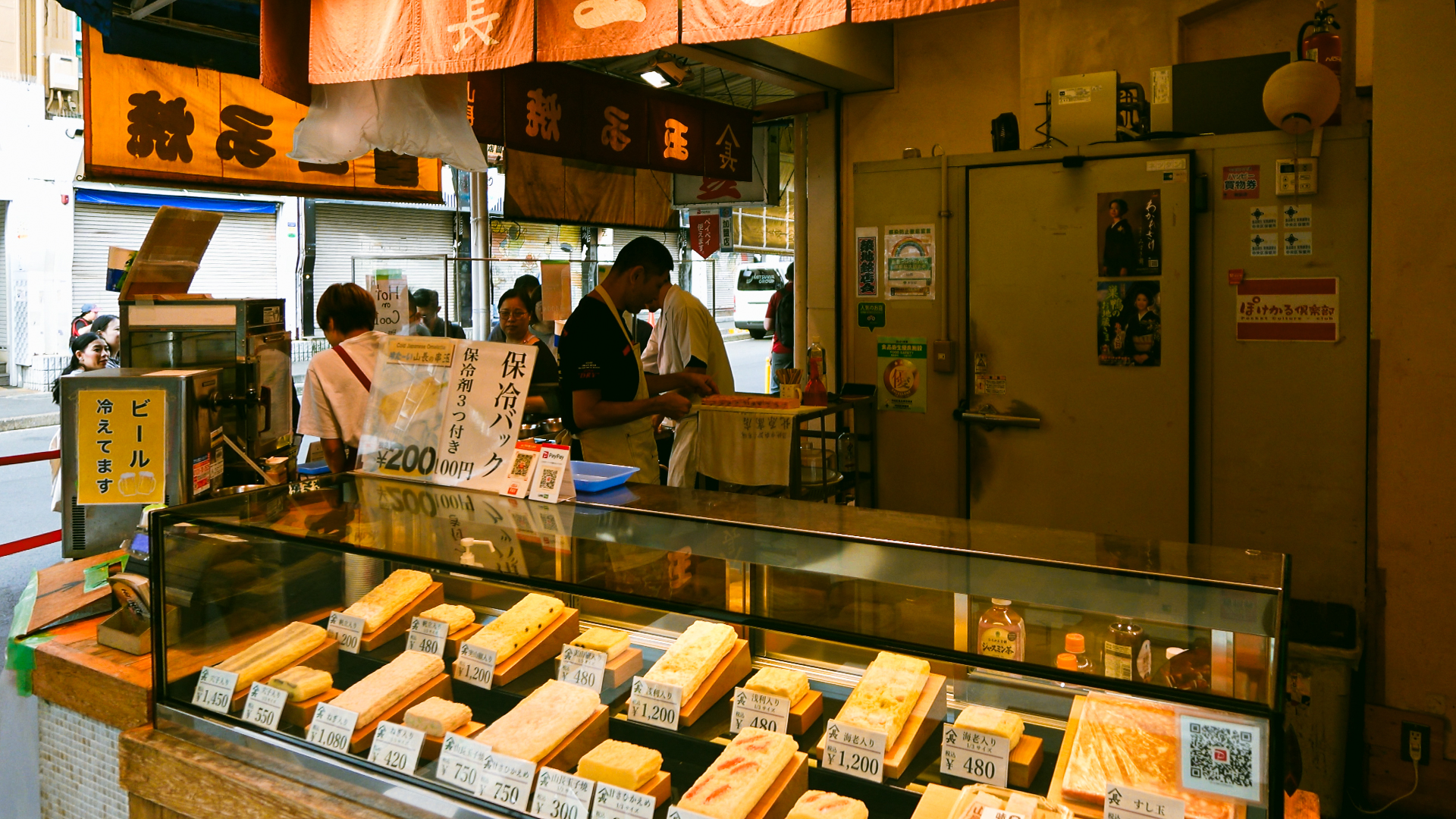
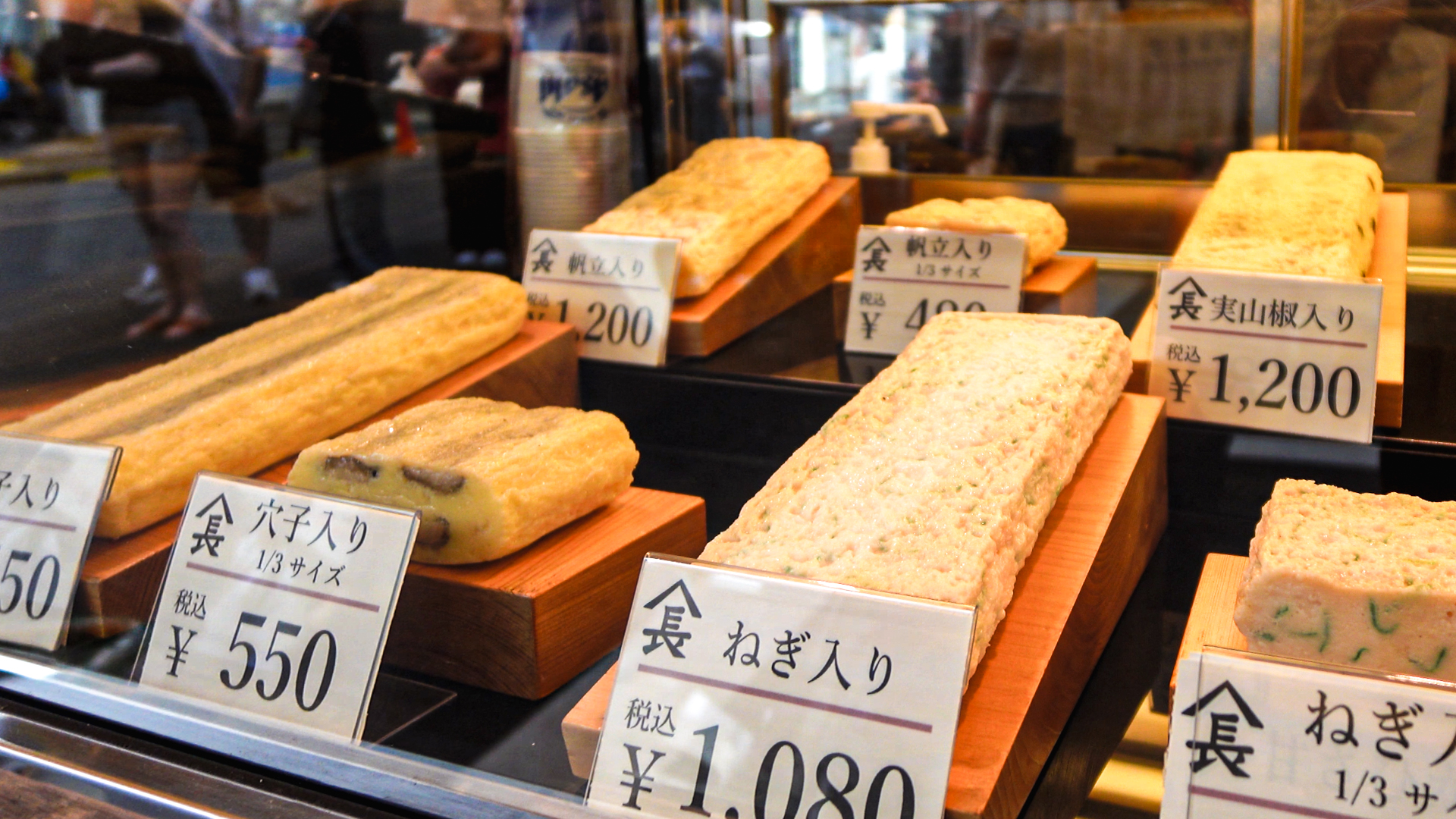
This was a disappointment. I’d seen so much hype about the tamago here, but honestly, it was just average. The texture was fine, and the flavor was okay, but nothing special. I’ve had better tamago at random sushi restaurants. Maybe my expectations were too high, but this one didn’t live up to them.
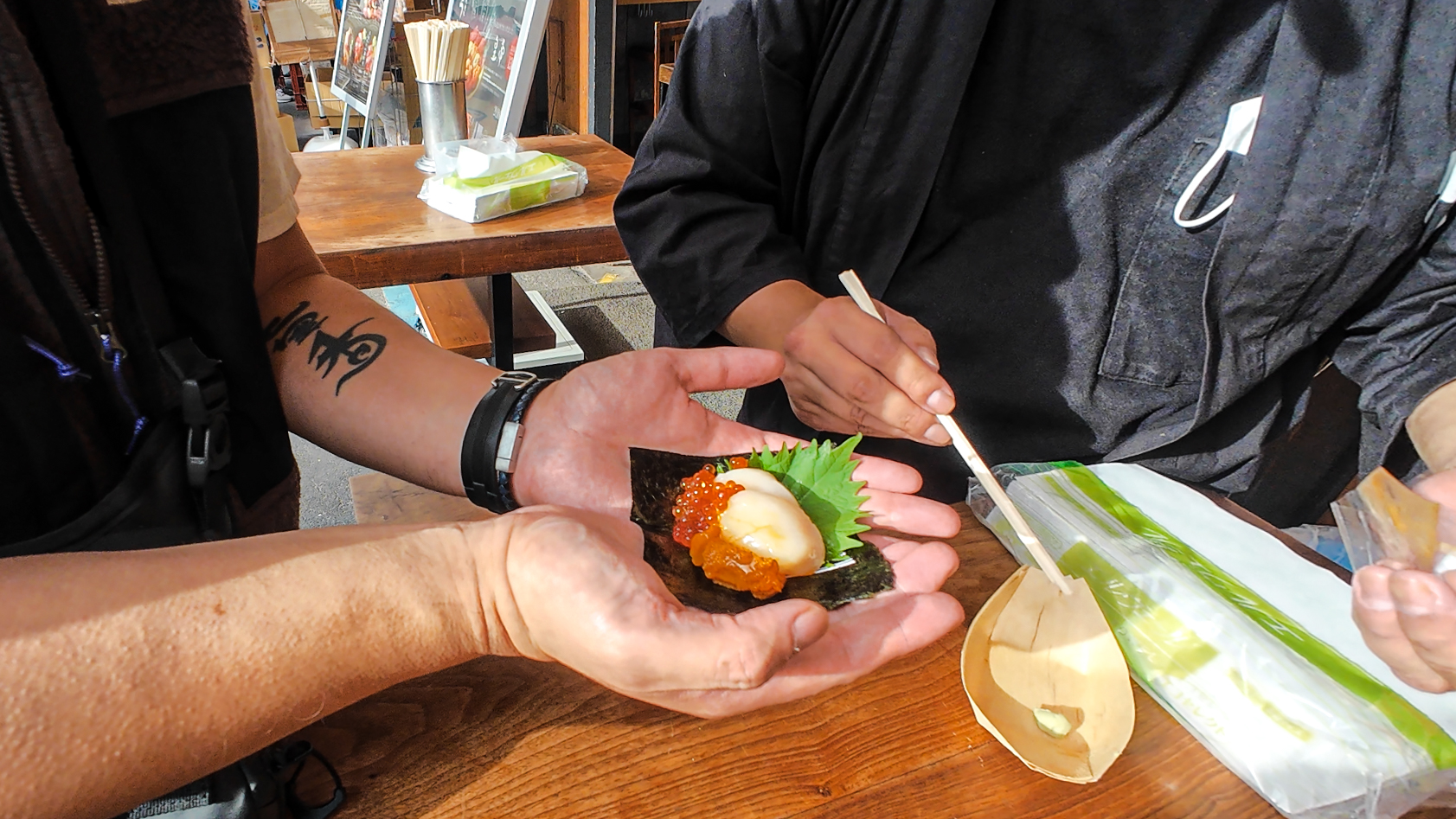
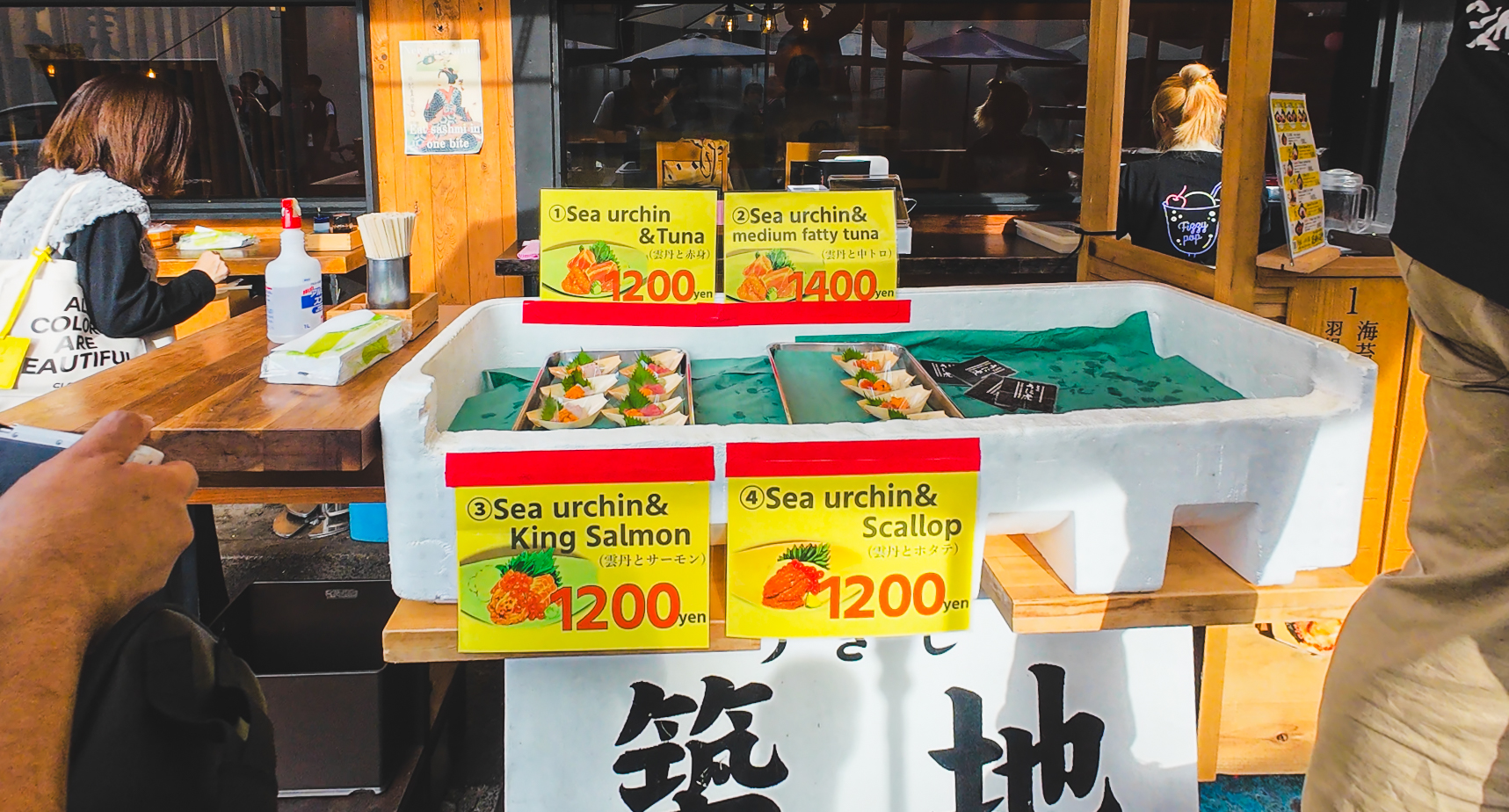
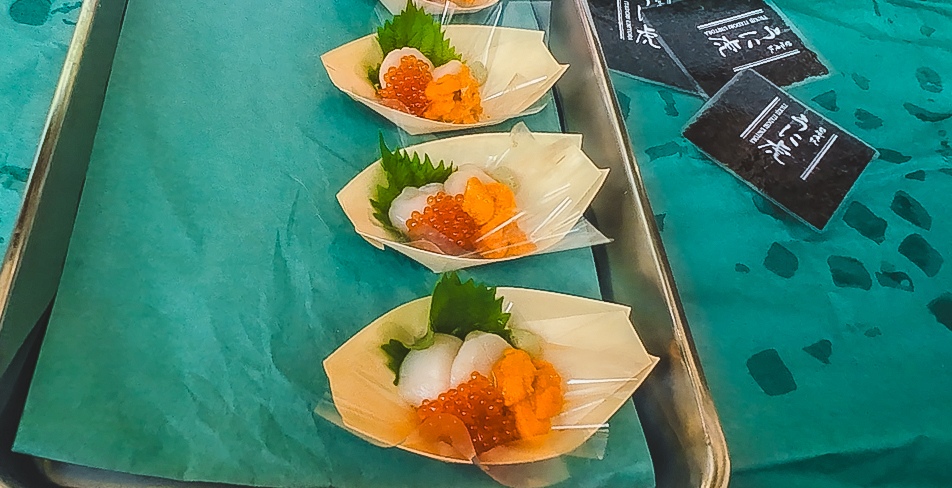
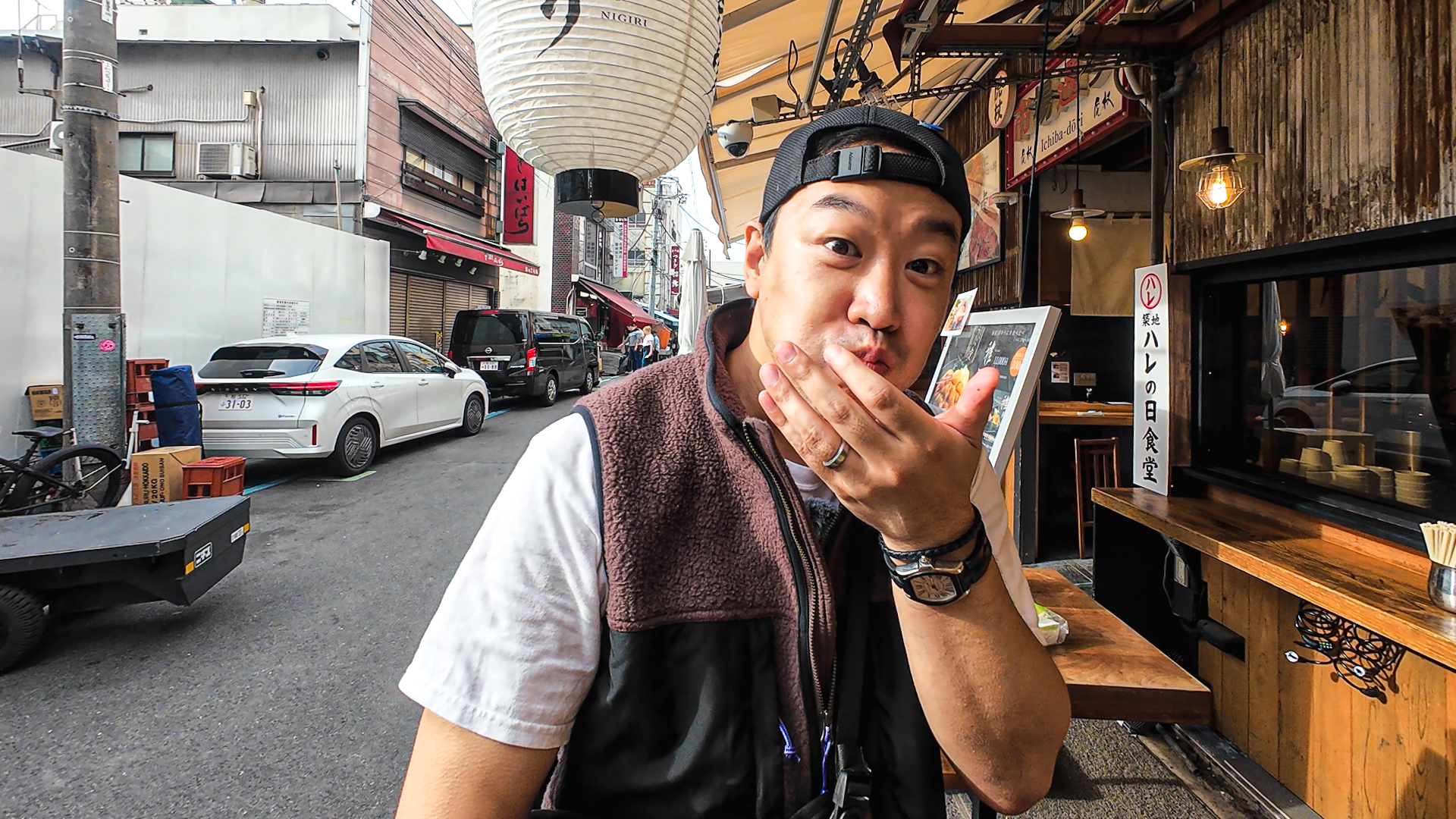
4. Scallop, Ikura, and Uni Tray
💵 Price: 1,200* yen (~$12 CAD)
⭐ Rating: 4/5
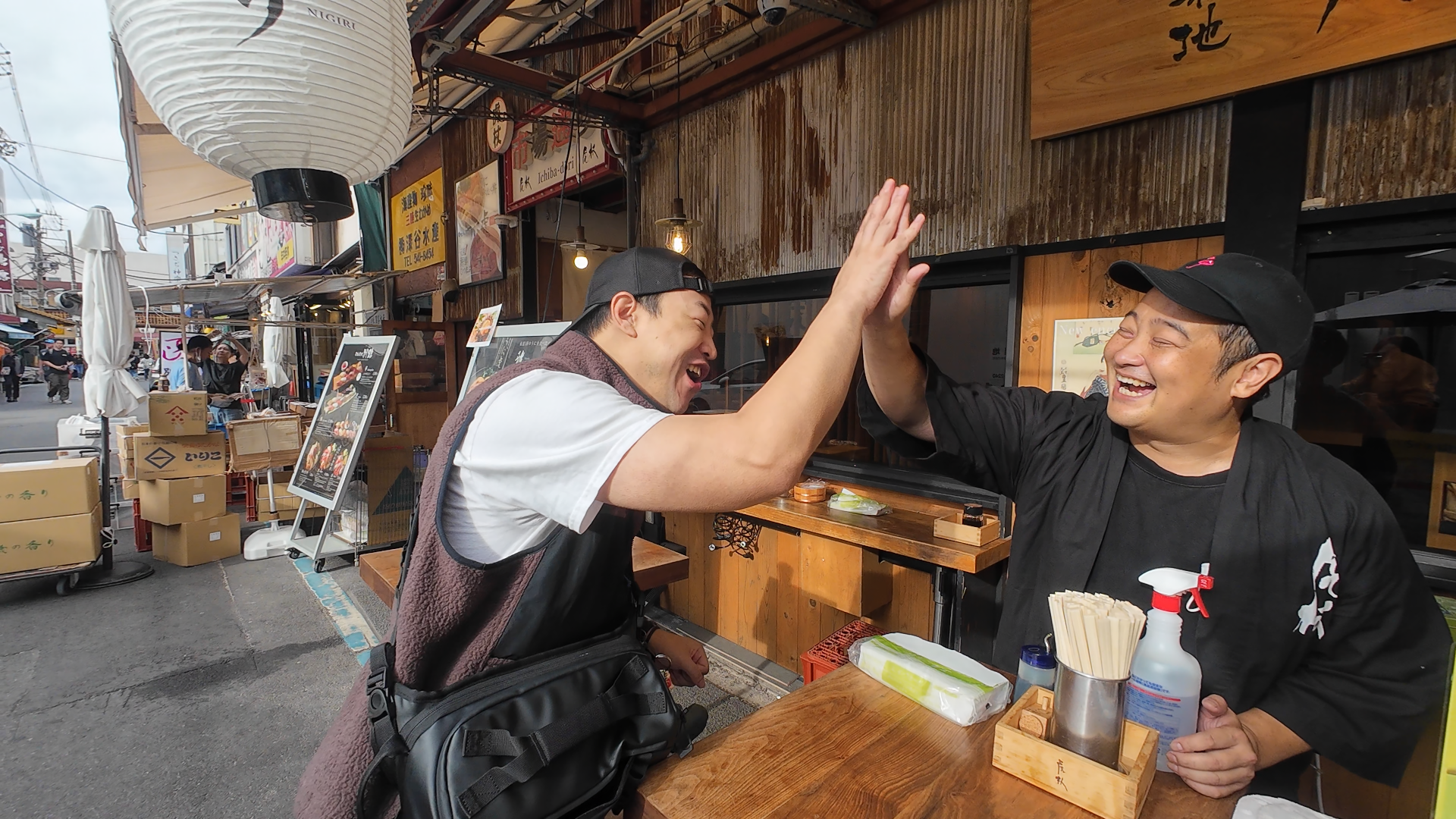
Ian couldn’t resist this tray, and the presentation was super fun. They even gave us a custom piece of seaweed with their logo to make little rolls. The owner was so sweet and helped Ian craft the perfect bite. His face lit up after the first taste, so I knew it was a winner.
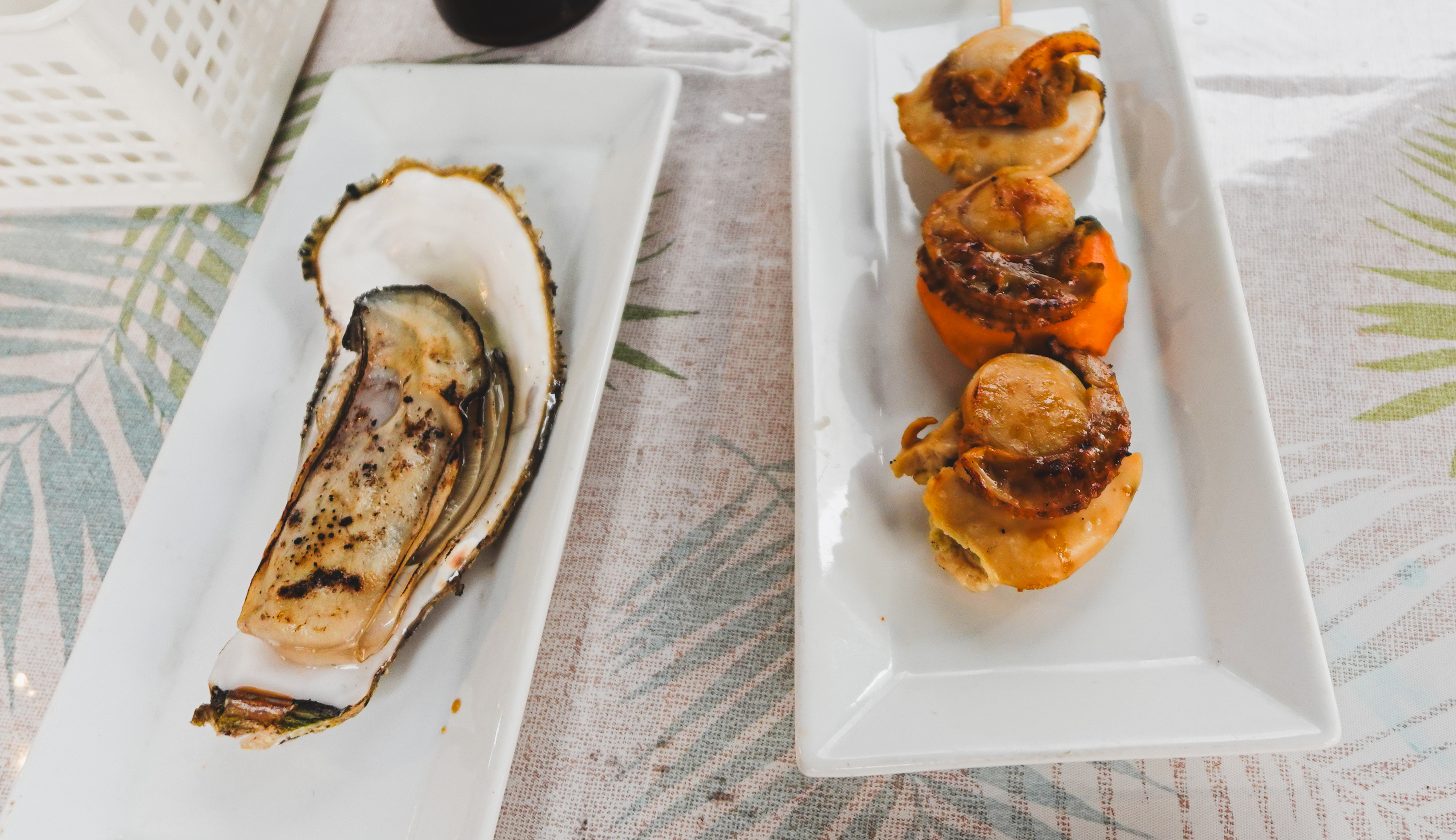
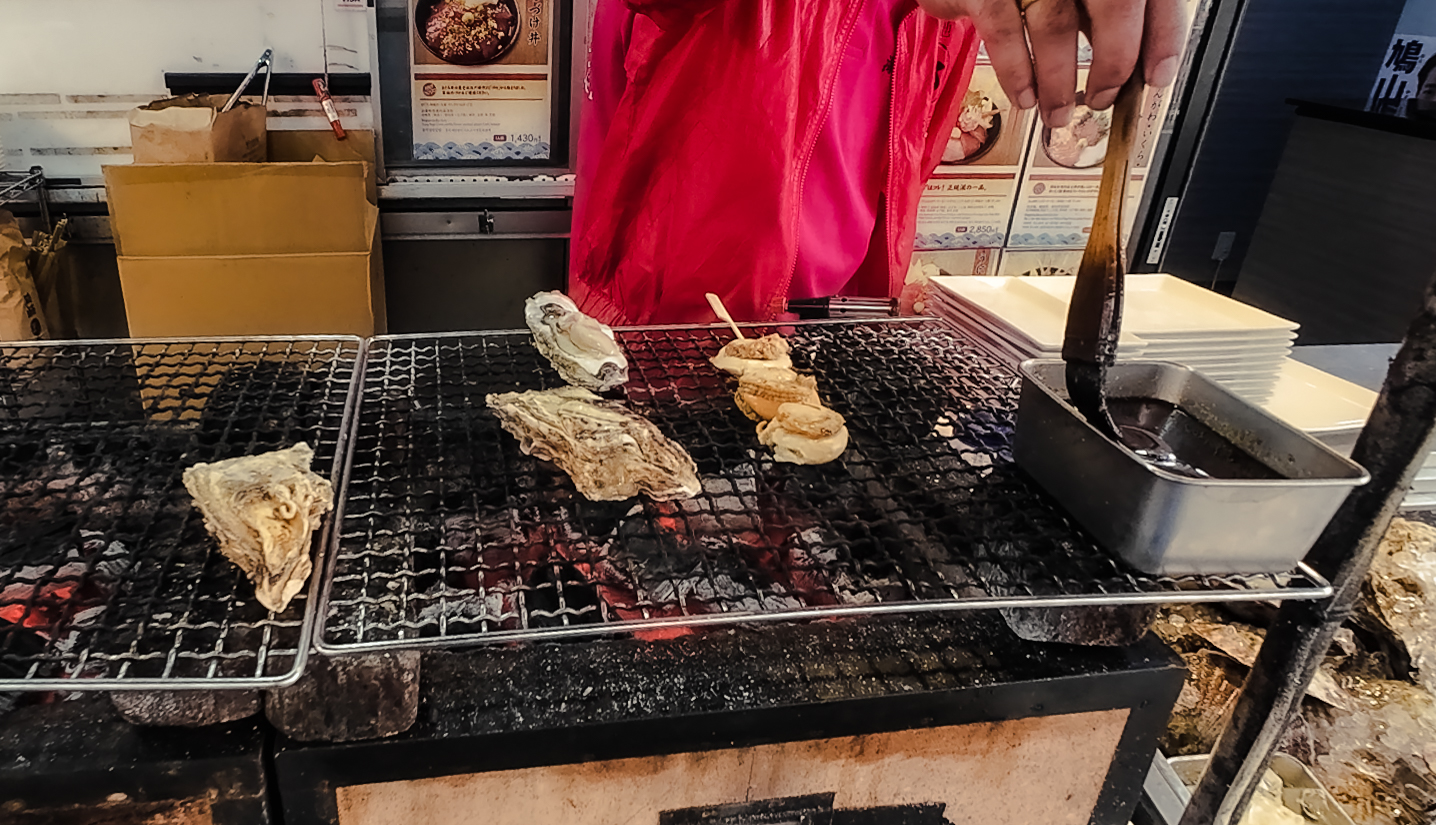
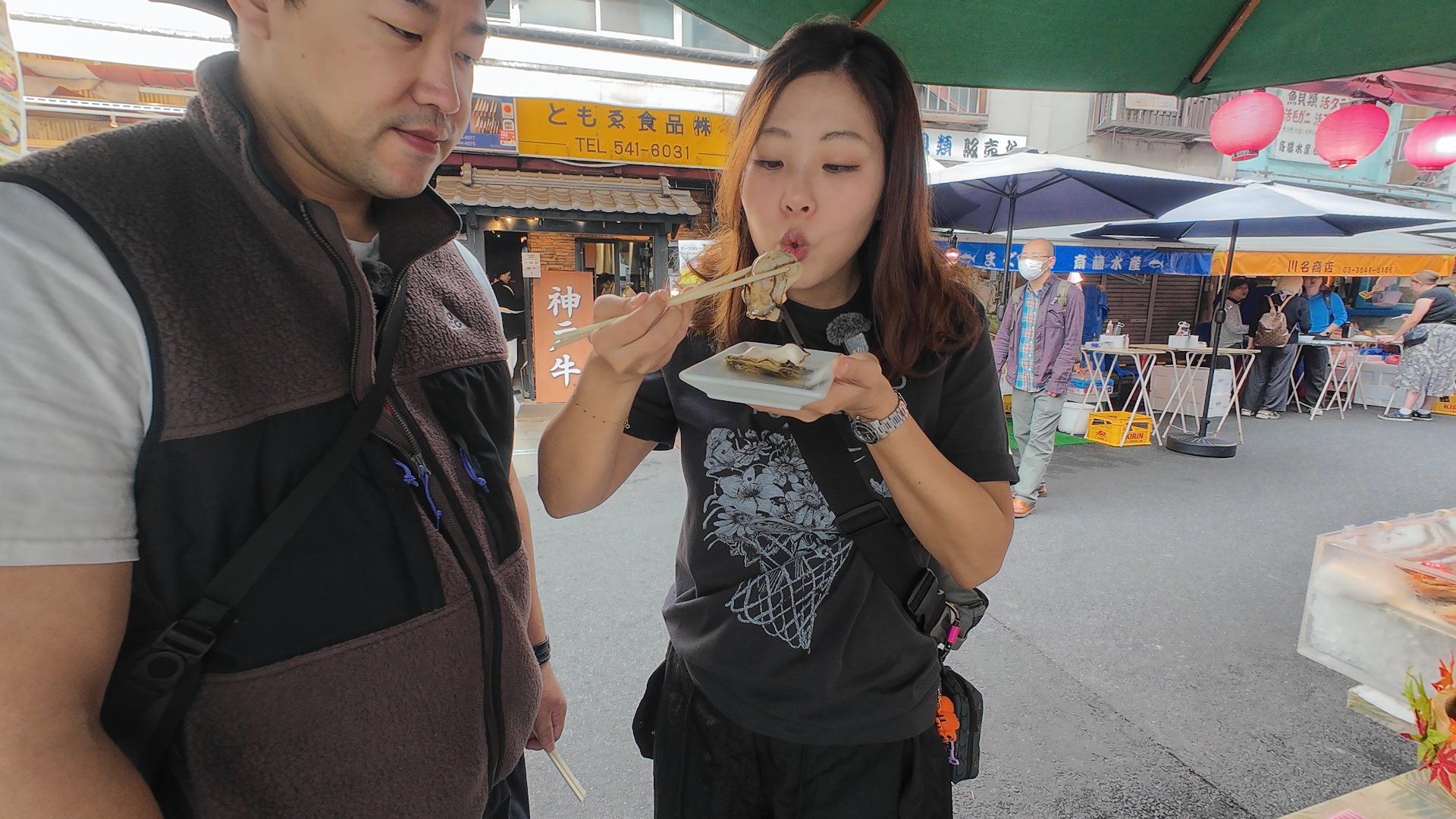
5. Grilled Oysters and Scallops
💵 Price: 2,000 yen (~$20 CAD)
⭐ Rating: 2/5
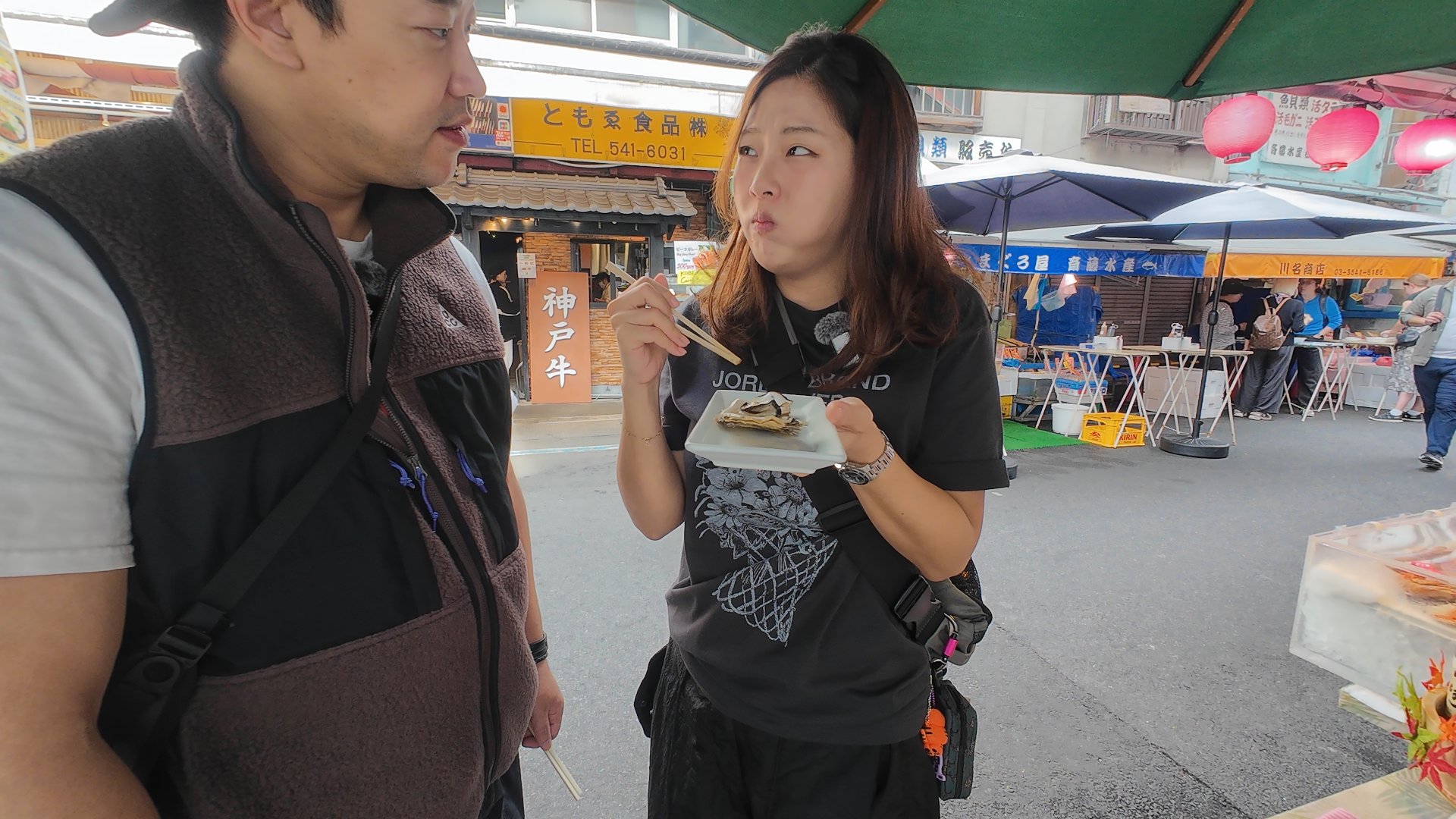
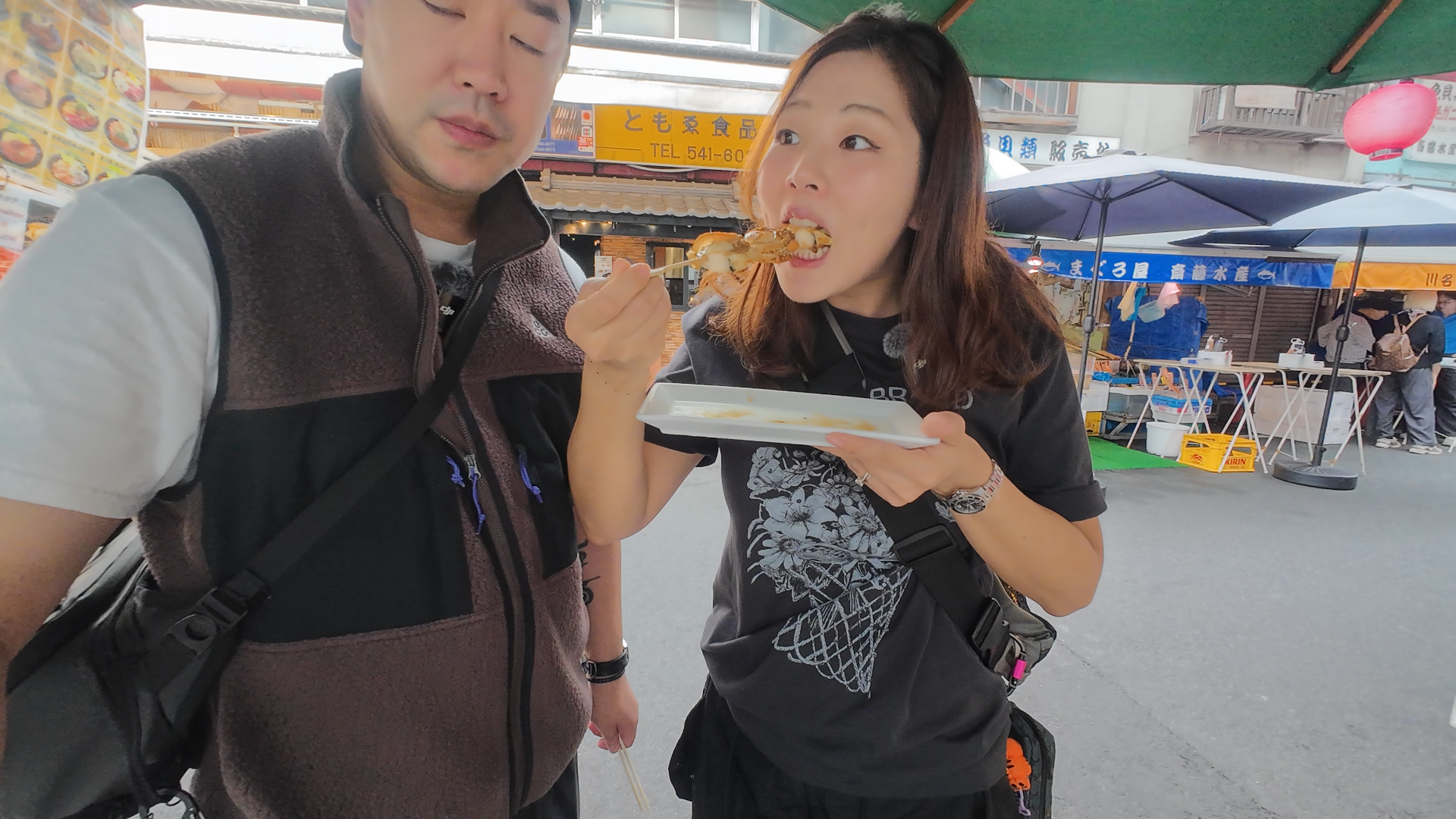
Unfortunately, these were a miss. The oysters were too fishy. The scallops were good but It was a letdown, especially since I wasted precious stomach space on them.
6. Crawfish Senbei
💵 Price: 950 yen ($9.50 CAD)
⭐ Rating: 4/5
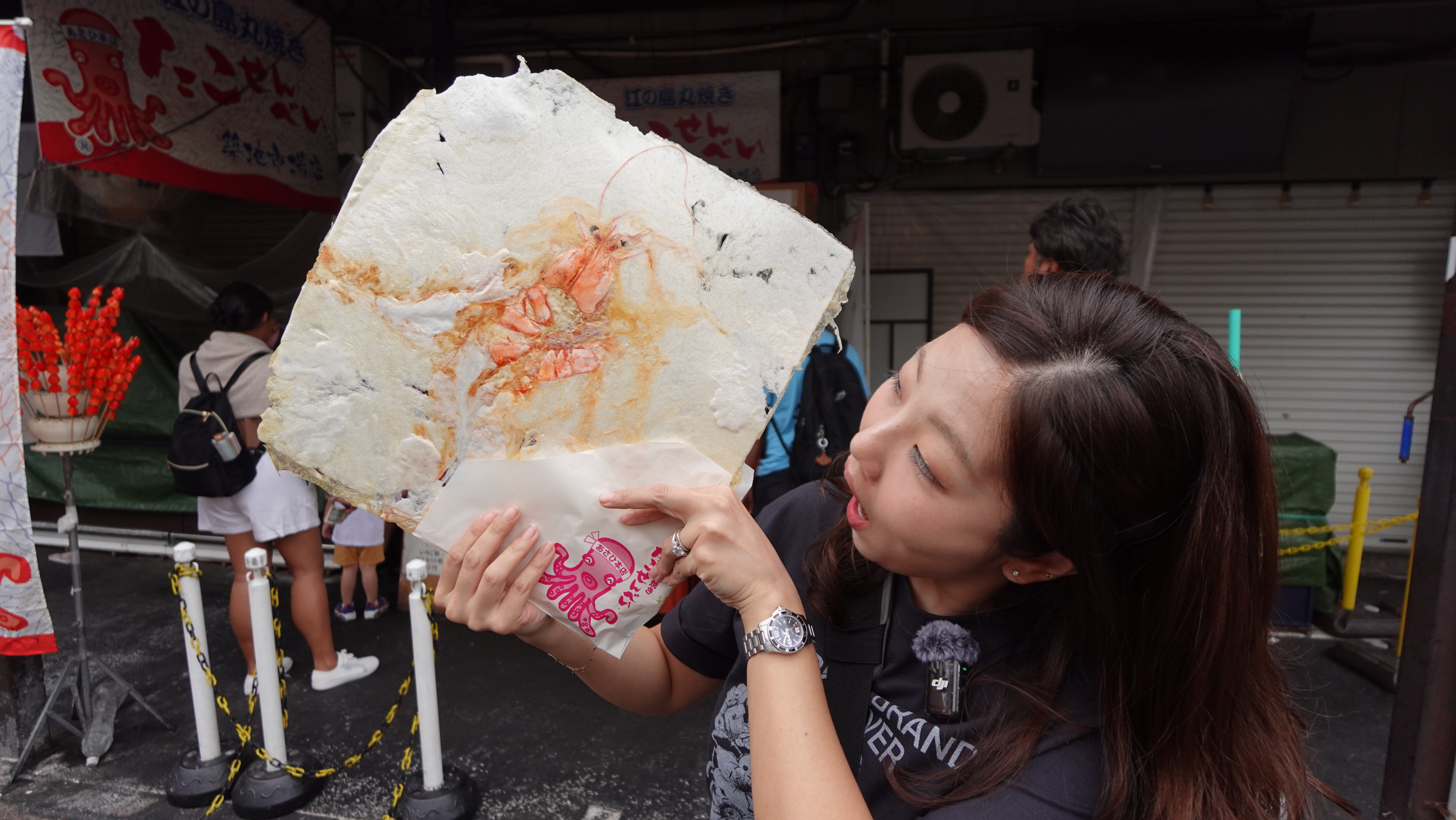
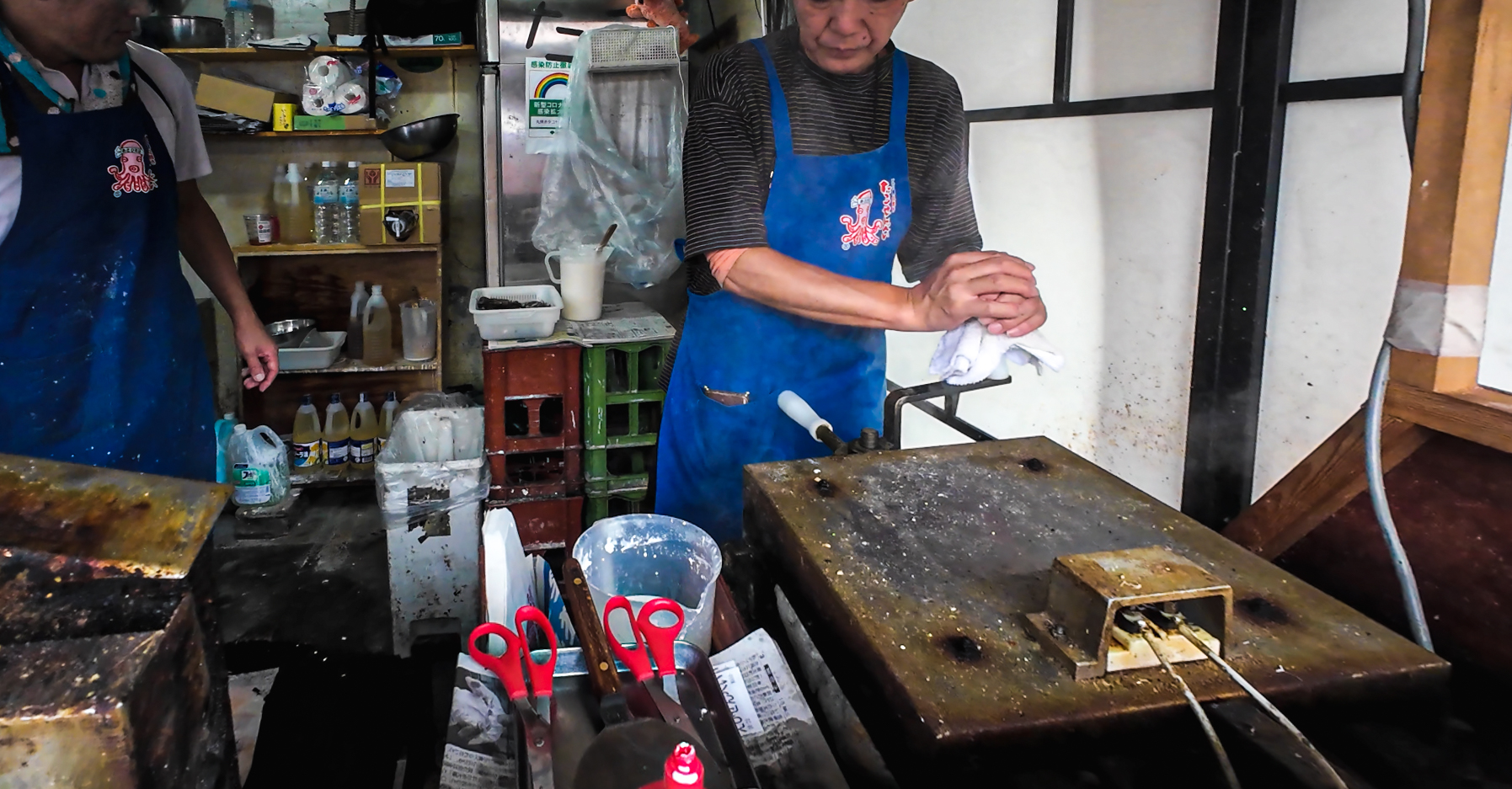
This was one of the most Instagrammable snacks of the day. They press a whole crawfish into a cracker, which is then flattened and grilled into a massive senbei. It looked super cool, but the flavor was pretty bland. If they’d added more seasoning, it would have been perfect.
Final Thoughts: Tsukiji Market
By the time we wrapped up our day, we were absolutely stuffed—and happy. Sure, not every dish was a home run, but that’s part of the fun of exploring a food market. You try, you discover, and you savor the hits while laughing about the misses.
💡 Top Tip: Start with lighter dishes like tamago or sashimi before diving into the rich wagyu and uni combos. Your stomach will thank you!
Even though Tsukiji has a reputation as a tourist trap, we think it’s still worth visiting, especially if you’re a seafood lover. The fresh ingredients and lively energy make it an unforgettable experience. And now that we’ve scratched our seafood itch, I’m already planning what to eat next time we’re in Japan!
📺 Want to see it all in action? Watch our full Tsukiji Market vlog on YouTube for more food reviews, tips, and behind-the-scenes fun. Don’t forget to like, comment, and subscribe to join us on more food adventures!
Watch the Full Experience on YouTube! 🎥 ➡️ Watch the Video Now
Keywords for SEO
Tsukiji Market Food Guide, Best Seafood in Tokyo, Tokyo Food Market, Tsukiji Travel Tips, Tuna Sashimi Tokyo, Wagyu Uni Skewer Review, Japan Food Tour 2024, Tokyo Food Blog, Must-Eat Foods in Tsukiji Market, Street Food in Tokyo.
 chasingthechungs.com
Leave a comment