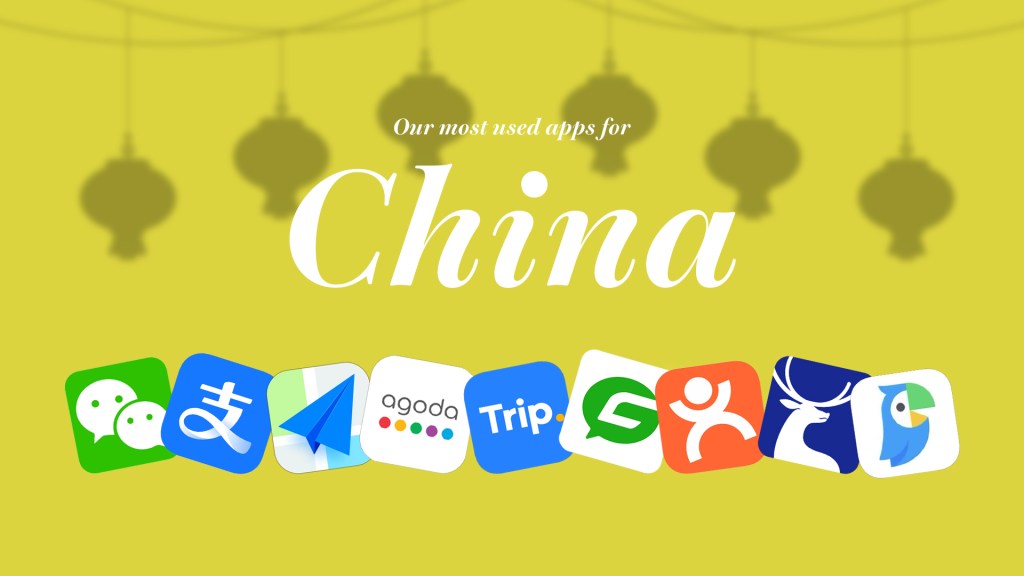
What Actually Worked for Us After 50 Days on the Ground
China is one of the most app dependent countries we’ve ever traveled through.
Paying for meals, ordering taxis, entering the metro, even sitting down at a restaurant all revolve around your phone. With the right apps, traveling China feels efficient and surprisingly smooth. Without them, even simple tasks become difficult.
We spent 50 days traveling across multiple cities in China, mostly independently, with a short guided tour at the beginning. These are the apps we actually used every day and what worked for us as foreigners.
Payments. The Non Negotiables
If there is one thing you need to set up before landing in China, it is mobile payments.
China runs almost entirely on QR code payments. Cash exists, but it is rarely used.
Alipay
WeChat Pay
We linked our foreign credit cards to both apps and had no issues. Payments worked every single time. Restaurants, cafes, taxis, convenience stores, attractions. No failures.
One important thing to know is that most restaurants do not hand you a physical menu. You sit down, scan a QR code, order through your phone, and pay through the app. This makes Alipay or WeChat Pay essential.
We personally preferred using WeChat Pay in restaurants because it has a built in translation feature. Being able to translate menu items directly inside the app was extremely helpful.
Set these apps up before arriving. Verification is much easier when you still have access to your home country phone number.
Transportation Apps

Getting around China is very manageable once you understand the system.
Didi
This is the Uber of China. Taxis were affordable, reliable, and felt very safe. We used Didi almost daily and never had a bad experience.
Metro QR Code via WeChat Mini Program
Instead of buying physical metro cards, we used a QR code system inside WeChat.
Search this in WeChat.
乘车码

Look for the green G logo.
You will need a Chinese phone number to register. We shared one phone number between two people and had no issues across multiple cities.
One downside is that you cannot link a foreign credit card. This system only works with a WeChat balance. We were lucky to have a Chinese friend who transferred RMB to us. Without that, using the metro QR system would be difficult.
Trip.com
We used Trip.com to book bullet trains and flights. Once you add your passport information, booking is quick and straightforward. Tickets were issued immediately and redemption was seamless at stations.

Maps and Navigation
Google Maps does not work properly in China.
We used Amap almost exclusively.
We switched it to the English version and it felt very similar to Google Maps. Navigation was accurate, transit routes worked well, and walking directions were reliable. We used it daily across multiple cities without issues.
Amap alone made navigating China much less intimidating.
Food and Daily Life Apps

This is where China feels very different from other countries.
Dianping
This app is widely used for food discovery and delivery. We struggled with it because everything was in Chinese and not very foreigner friendly without help. We ended up not relying on it much.
Trip.com
This surprised us in a good way. Trip.com has a social-style section where people post their itineraries, hotel stays, and food recommendations.
One traveler raved about a restaurant in Chengdu and said it was his favorite spot during his entire trip. We decided to try it. It did not disappoint.
The Dan Dan noodles were incredible and easily became one of our favorite meals in Chengdu. It became one of our go-to ways to discover food without needing Instagram.
Amap
Since Dianping was difficult to use, we often searched for restaurants directly on Amap. It shows reviews, photos, and how close places are to your location. That made it very practical when we were already out and hungry.
WeChat Mini Programs
This is the real gold mine.
Many restaurants, cafes, attractions, and services operate entirely through WeChat mini programs. You scan a QR code, browse the menu, order, and pay all within the app.
We also found daily Luckin Coffee deals through WeChat. We regularly paid 9.99 RMB for coffee or juice just by checking the app.
Once you get comfortable with WeChat, daily life in China becomes much easier.

SIM Cards, eSIMs, and Connectivity
Having reliable data is essential.
We found an excellent eSIM deal through Trip.com.
36 CAD for 30GB of data for 30 days.
It worked well.
If you are traveling as a couple, we recommend this setup.
One person gets an eSIM.
The other gets a physical SIM with a Chinese phone number.
We bought a physical SIM at Guangzhou airport. The process was fast and seamless.
Having at least one Chinese phone number makes registrations, metro access, and customer service much easier.

VPN. Necessary but Not Perfect
You will need a VPN in China.
We started with Mullvad and it did not work for us. We switched to Surfshark and it worked consistently. We bought the annual plan since we travel long term.
That said, VPNs do slow things down.
In our case, this was frustrating because we often rely on social media to look for restaurants and places to visit. When the VPN was slow, apps like Instagram were difficult to use.
We found alternatives.
Trip.com has a social style feed where people share itineraries, hotel recommendations, and restaurant tips. This worked without a VPN and became one of our main planning tools.
Rednote is also popular alternatives and often used instead of Instagram in China.

Translation and Language
We relied heavily on translation apps.
Papago was our go to.
We originally thought we might get by with Ian’s Cantonese, but very few people spoke it. Hardly anyone spoke English either, even in major cities.
Translation apps were essential.
Locals often preferred to speak directly into the translation app to communicate with us. Make sure you are comfortable using your translation app before you arrive, because you will be using it often.
Translations were not perfect and occasionally funny, but they worked well enough for ordering food, asking questions, and getting around.
Important Things We Learned Quickly
Always carry your passport.
Many attractions require your physical passport for entry. Even if you book tickets through Trip.com, you must show your passport to redeem them.
Expect security checks everywhere.
Every metro entrance required bags to go through X ray machines. Liquids were flagged. I had to throw out a liquid hand sanitizer spray. In some cities, water bottles were scanned. My asthma inhaler was inspected more than once.
Safety is taken very seriously.
You will also see police officers regularly on trains, subways, and in public spaces, often wearing cameras. It feels strict at first, but it contributes to how safe the country feels overall.

Follow Our China Journey
We documented our entire time in China across multiple cities on YouTube.
If you want to see what daily life, transportation, food, and culture actually look like on the ground, follow along with our China series.
Subscribe to Chasing the Chungs on YouTube to explore China with us, one city at a time.
 chasingthechungs.com
Leave a comment