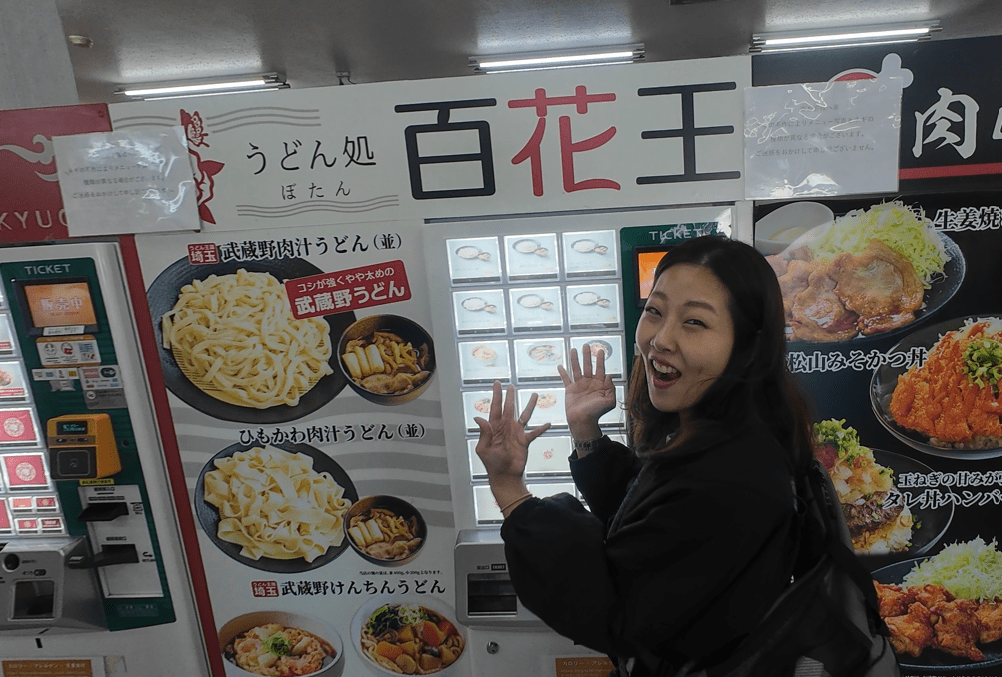
We go back to Japan every year. No exaggeration. It is one of those places that gets under your skin the first time and never really lets go. Back when we had family living there, we were lucky enough to have a home base and skip the hotel costs entirely. Those days are behind us now, and booking hotels in Japan in 2026 hits very differently. Add a new government tax on top of everything else, and we need to have an honest conversation about what a Japan trip actually costs right now.
This post breaks it all down: what the new departure tax is, all the fees now stacking up, whether it is still worth going, and where smart travellers are heading to escape the worst of the crowds.
In This Post
- What Is the Japan Departure Tax?
- All the New Fees Stacking Up
- The Tourist Problem Nobody Wants to Talk About
- Japan Etiquette: Please Read This Before You Go
- Is Japan Still Worth It?
- Where to Go Beyond the Golden Route
What Is the Japan Departure Tax?
Starting July 2026, every single person leaving Japan by air or sea will pay triple what they used to. The International Tourist Tax, which has sat at a quiet ¥1,000 per person since it launched in 2019, is jumping to ¥3,000 per person. It is built into your airline ticket, so there is no separate line at the airport. You will just pay more for your flight out without necessarily noticing it.
To put that in plain Canadian dollars at the current exchange rate of roughly 1 JPY = $0.0086 CAD: the old tax was about $8.60 CAD per person. The new one is about $25.80 CAD per person. Travelling as a couple? That is an extra $34 CAD just to leave the country. A family of four is looking at an extra $69 CAD on top of everything else.
The tax applies to everyone aged two and up, Japanese citizens included. Airline crew and transit passengers departing within 24 hours are exempt.
The Japanese government estimates this change will bring in roughly ¥130 billion (about $1.1 billion CAD) in the 2026 fiscal year. The stated goal is to fund sustainable tourism, reduce crowding at cultural sites, and improve infrastructure in regions that have been overwhelmed by visitor numbers.
All the New Fees Stacking Up in 2026
The departure tax is just one piece of a bigger picture of rising costs that is reshaping what Japan trips actually cost. For context: we are budgeting $4,500 CAD (~$3,270 USD) total for two people doing 8 days in Japan. That is on the conservative side because we have been enough times to know where to spend and where to skip. Most first-timers doing a mid-range trip should budget closer to $4,500 to $6,000 CAD (~$3,270 to $4,360 USD) for the same duration, not including flights.
Here is roughly how we break that down:
- 🏨 Accommodation: $1,800 to $2,000 CAD (~$1,310 to $1,450 USD) for 8 nights. Japan has excellent business hotels that are clean, well-located, and very reasonably priced.
- 🍜 Food: $1,500 to $1,800 CAD (~$1,090 to $1,310 USD) for two. This sounds like a lot until you remember you are eating in Japan, where world-class ramen costs $10 CAD and convenience store meals are genuinely good. We budget this high because we eat well and love izakayas.
- 🚇 Transit: $400 to $600 CAD (~$290 to $435 USD) for two. City subway rides run about $2 to $4 CAD each. If you are moving between cities, a single Tokyo to Kyoto Shinkansen is around $185 CAD per person. The 7-day JR Pass ($385 CAD per person) is only worth buying if you are covering serious ground.
That is before flights from Canada, which are not cheap, and before the growing list of government fees now stacking up. Here is everything new hitting travellers this year.
Departure Tax: ¥1,000 to ¥3,000
As covered above, this kicks in July 2026. Book your flights departing Japan before July if you want to lock in the old rate. It is embedded in your ticket price so you will not pay it separately.
Kyoto Accommodation Tax
Kyoto launched a new tiered accommodation tax in March 2026. Budget travellers in hostels and cheap hotels will feel minimal impact. However, if you are staying in a high-end ryokan or a luxury hotel with rates over ¥100,000 per night, expect an additional tax of up to ¥10,000 (~$86 CAD) per person per night on top of your room rate. This is aimed squarely at the overtourism problem in Gion and the historic districts.
Tourist Visa Fees Increasing
Japan is in the process of raising tourist visa fees for countries that are not in visa-waiver agreements. For Canadians, Japan is still visa-free for short stays. But if this changes or you require a visa for any reason, fees are moving from ¥3,000 to as high as ¥15,000 (~$129 CAD) for a single-entry visa.
JESTA Coming in 2028
Japan is building its own version of the US ESTA system, called JESTA. It will apply to visa-exempt travellers including Canadians. The fee has not been finalized but is expected to run ¥2,000 to ¥3,000 (~$17 to $26 CAD) per person. Combined with the new departure tax, travellers could be looking at mandatory fees of ¥5,000 to ¥6,000 (~$43 to $52 CAD) per person just in government charges. This one is coming in 2028 so it does not affect your 2026 trip yet, but plan for it.
JR Pass Price Increases
The Japan Rail Pass has also gone up. Regional passes have been restructured and repriced in 2026. If you are planning a trip around the Shinkansen, do the math carefully before automatically buying the national JR Pass. Depending on your itinerary, individual tickets or regional passes may actually save you money now.
The Tourist Problem Nobody Wants to Talk About
Here is my honest take and I know some people will not want to hear it: Japan has a tourist problem, and the tourists themselves are a big part of the problem. I noticed it sharply when we went back in 2025 compared to 2024. There were more people everywhere, yes. But the more frustrating thing was how many of those people were behaving. Not just clueless about Japanese customs, but actively disrespectful in ways that chip away at the very thing that makes Japan so special.
Japan is not Disneyland. The culture, the calm, the extraordinary sense of order and respect: those things exist because Japanese people cultivate them. When tourists come in and treat the streets like a party venue and the subway like a social club, they are not just being rude. They are eroding the experience for everyone around them, locals and fellow travellers alike.
This is why cities like Kyoto are blocking off popular alleys. Why Fujiyoshida cancelled its famous cherry blossom festival for 2026. Why the government is tripling the departure tax. The message is pretty clear.
Japan Etiquette: Please Read This Before You Go
If you are planning a trip to Japan, do yourself and everyone else a favour and actually learn the basics before you land. These are not suggestions. They are how things work there, and ignoring them marks you immediately as someone who did not bother to prepare.
- 🚇 Do not talk on the subway. Seriously. Talking on public transit is considered rude in Japan. If you absolutely must say something, whisper. Watching tourists loudly catching up on gossip while locals sit in polite silence is genuinely embarrassing to witness.
- 🚶 Respect the queue. Japanese people line up for everything and they do it perfectly. Do not cut in. Do not budge. The line works because everyone participates.
- 🛗 The elevator has rules. The first person into an elevator is responsible for operating it. You hold the door open button, you press floors for others, and you face the front. I see tourists spin around to face the back of the elevator constantly and I genuinely have no idea where they learned this was acceptable. It is not.
- 👗 Dress appropriately. Japan is a fairly conservative culture. Walking around temples or shrines in clothing that reveals too much is disrespectful. Read the room.
- 📷 Do not photograph where it is not allowed. Signs are there for a reason. Some neighbourhoods like Gion in Kyoto have cracked down specifically because tourists were harassing geisha for photos. Do not be that person.
- 🗑️ Carry your garbage. There are almost no public bins in Japan. The expectation is that you hold onto your rubbish until you find a proper place to dispose of it. Do not leave it on benches or stuff it into random containers.
- 📖 Do your homework. Before you go, look up what behaviours Japanese people find most frustrating from tourists. It takes an hour and it makes a real difference.
Is Japan Still Worth It?
Yes. Every single time. I keep going back because Japan gives me something I struggle to find anywhere else: genuine calm. Clean streets, respectful strangers, food that is thoughtfully made at every price point, and an aesthetic sense that runs through everything from the packaging of a convenience store onigiri to the way a ramen shop owner wipes down the counter. It is a place where things are done with care.
When tourists come in and disturb that, it stings more than it would somewhere else because the contrast is so stark. But the answer is not to avoid Japan. The answer is to go and be the kind of visitor the country deserves. Study the etiquette, venture beyond the crowded spots, eat at the places locals eat at, and genuinely try to understand what makes it special rather than just ticking boxes.
Yes, it is more expensive now. But Japan has never really been a budget destination for Canadians once you factor in flights. The new taxes add cost but they do not fundamentally change the calculus for people who were already planning to go. Plan for it, budget for it, and go.
Where to Go Beyond the Golden Route
Ian and I are creatures of habit in Japan. We go back to the same neighbourhoods partly because they bring back memories and partly because we love them. But if you want to get away from the worst of the tourist crush, or if you are a repeat visitor ready for something new, here is where people are heading in 2026.
I have not personally been to all of these, so I want to be transparent about that. What follows is a mix of places on my radar and places that are trending in the travel conversation right now. I will report back properly as we explore more.
Kanazawa
Often called a mini-Kyoto, Kanazawa has the temples, the tea houses, the traditional craft culture, and the stunning Kenroku-en garden without the wall-to-wall tourist crowds. It sits on the Sea of Japan coast and has excellent seafood. It is on the Shinkansen line from Tokyo so access is straightforward. This one is high on our list.
Kyushu
We have a whole post in the works on Kyushu because it deserves serious attention. Fukuoka is a food city with a strong argument for being one of Japan’s best eating destinations. Beppu has more hot spring sources than almost anywhere on earth. Nagasaki carries a weight and beauty that is unlike anywhere else in Japan. The region sits completely off the standard tourist circuit and it shows: fewer crowds, more local energy, lower prices.
Takayama
Tucked into the Japanese Alps in Gifu Prefecture, Takayama is a beautifully preserved Edo-period town with morning markets, sake breweries, and a pace of life that feels genuinely different from the cities. The Sanmachi historic district is one of the most atmospheric streets in Japan. Accessible by train or bus from Nagoya, Osaka or Tokyo.
Okinawa
Okinawa just made TripAdvisor’s global top 20 trending destinations for 2026 and it makes complete sense. It is a two-hour flight from the Japanese mainland and it operates like a completely different country: subtropical climate, coral reefs, its own distinct Ryukyuan culture, and some of Japan’s best diving and snorkelling. For Canadians escaping winter, this is a Japan trip that also doubles as a beach trip.
Tohoku
The northeastern region of Honshu is one of Japan’s most overlooked areas by foreign visitors. It has late-blooming cherry blossoms (meaning you can chase sakura season later into spring), traditional festivals like the Hirosaki Cherry Blossom Festival in Aomori, and a quieter, more rural version of Japan that feels increasingly rare. The Tohoku Shinkansen makes it accessible from Tokyo in under two hours.
Fukui
Not on many itineraries yet but trending in the 2026 conversation. Fukui Prefecture on the Sea of Japan coast is known for Eiheiji Temple, one of Japan’s most significant Zen monasteries, the dramatic Tojinbo cliffs, and traditional Echizen lacquerware. It is exactly the kind of place that rewards the traveller who has already done the main circuit and wants something that feels genuinely discovered.
We will be updating this post after our April 2026 trip with real on-the-ground costs. If you are planning a Japan trip and have questions about what to budget or where to go, drop them in the comments below. And if you want to see more of what Japan actually looks and feels like day to day, come find us on Instagram at @chasing.jenny or check out our YouTube channel for more on our travels across Asia.
Planning the bigger Asia trip that Japan fits into? Read our full breakdown of our 202-day digital nomad journey across six Asian countries, including exactly what each country cost us and which one we would go back to fastest.
 chasingthechungs.com
Leave a comment