
Things to know
for your China travel.
Traveling to China for the first time is exciting but can feel overwhelming with how big and different the country is. When we were planning, we found ourselves constantly Googling little things like Do I need a VPN?, How do I pay for food if it’s cashless?, What’s the deal with trains vs flights? To save you the same rabbit holes, we put together this deep dive guide.






1. Visa & Entry Requirements 🛂
Most travelers need a visa to enter China, and the rules can change frequently as tourism reopens. Always check the latest requirements for your passport before applying.
Passport:
Your passport must be valid for at least six months beyond your planned departure date.
Visa:
For many nationalities, a tourist visa is required. When we applied in Canada, we were able to get a 10-year multi-entry visa for $75 CAD. The process itself was straightforward, but we did need to have our flights and hotel bookings confirmed in advance before submitting the application. That means some logistics need to be planned ahead of time, even if your itinerary isn’t finalized. A good workaround is booking refundable hotels and flights to use as proof of travel.
Visa-Free Policies:
Some travelers may qualify for visa-free entry, including the 144-hour transit visa available in cities like Shanghai and Beijing, or regional exemptions such as the 30-day Hainan visa-free policy. If you’re from one of the 38 countries on China’s visa-free list, requirements are simpler for short visits.
👉 Our tip: Apply early, double-check the requirements for your nationality, and carry a printed copy of your visa approval when you travel.

2. Booking Trains and Transport Hacks 🚆
Most travelers need a visa to enter China, and the rules can change frequently as tourism reopens. Always check the latest requirements for your passport before applying.
Passport:
Your passport must be valid for at least six months beyond your planned departure date.
Visa:
For many nationalities, a tourist visa is required. When we applied in Canada, we were able to get a 10-year multi-entry visa for $75 CAD. The process itself was straightforward, but we did need to have our flights and hotel bookings confirmed in advance before submitting the application. That means some logistics need to be planned ahead of time, even if your itinerary isn’t finalized. A good workaround is booking refundable hotels and flights to use as proof of travel.
Visa-Free Policies:
Some travelers may qualify for visa-free entry, including the 144-hour transit visa available in cities like Shanghai and Beijing, or regional exemptions such as the 30-day Hainan visa-free policy. If you’re from one of the 38 countries on China’s visa-free list, requirements are simpler for short visits.
👉 Our tip: Apply early, double-check the requirements for your nationality, and carry a printed copy of your visa approval when you travel.
3. Bathroom Reality Check 🚻
Public bathrooms in China can be a surprise for first-time travelers. Squat toilets are still common in train stations, parks, and smaller venues. Many restrooms have both squat and seated options, but you can’t always count on it.
Always carry tissues and hand sanitizer, as soap and toilet paper are not guaranteed. Some facilities have trash bins for tissue disposal rather than flushing, so check signs. In older stations or small towns, you may even find pay-per-use toilets.
👉 Our tip: Learn how to ask “Where is the bathroom?” in Mandarin: xǐ shǒu jiān zài nǎ lǐ (洗手间在哪里).
4. Safety and Common Scams 🚨
China is generally very safe, but there are a few common scams in big tourist areas.
One of the most well-known is the tea house or art student scam, where a stranger invites you to a tea ceremony or exhibit, then presents a huge bill. In cities like Beijing or Shanghai, this happens around popular attractions.
With taxis, always ask drivers to use the meter. Some may try to charge a flat fee that is much higher than the real cost. Using Didi, China’s version of Uber, is usually safer and easier.
When paying cash, count your change carefully. Most locals now use QR payments, which eliminates this problem. Pickpocketing is rare, but keep valuables secure in crowded markets or metro stations.
👉 Our tip: Save your hotel’s address in Chinese on your phone. It makes taxis and check-ins so much easier.
5. What to Pack (and What Not To) 🎒
🔋 Power Banks
Capacity limit: Still capped at 100Wh (about 27,000 mAh). Anything larger can be confiscated. You also can’t check power banks in luggage — they must go in your carry-on.
CCC label: Correct. Power banks in China must have the China Compulsory Certificate (CCC) label. If you bring a foreign one (without CCC), technically it might be refused during security checks.
🚉 Train & Metro Security
- Security checks: Every train station and many metro stations have airport-style bag scans. It’s routine.
- Liquids: Rules vary a bit by city, but generally:
- Bottled water is allowed (they often make you sip it).
- Alcohol is restricted on high-speed trains.
- Hand sanitizer: Some reports say liquid sanitizers over 100ml may get confiscated, while gel sanitizers are usually allowed. The safest bet: carry travel-sized (under 100ml) in gel or spray form.
- Sharp objects (like scissors, knives, nail clippers) are usually taken. Even small pocket knives aren’t allowed.
🚁 Drone Rules
- China has strict drone regulations:
- Registration: Required for drones over 250g (so your DJI Mini 3 at 249g is technically under the cutoff, which is why DJI made it that weight). That said, some provinces still may ask for registration regardless.
- Where you can fly: Forbidden near airports, government buildings, military areas, or crowded tourist attractions (like Tiananmen Square, the Bund in Shanghai, and some sections of the Great Wall).
- Permits: For professional or commercial use, you need approval from the Civil Aviation Administration of China (CAAC).
- Reality for travelers: Many tourists still fly in scenic areas (Li River, rural villages), but it’s risky to launch in cities without checking local rules. Confiscations happen if you’re caught flying in restricted zones.
6. Health and Food Safety 🍜
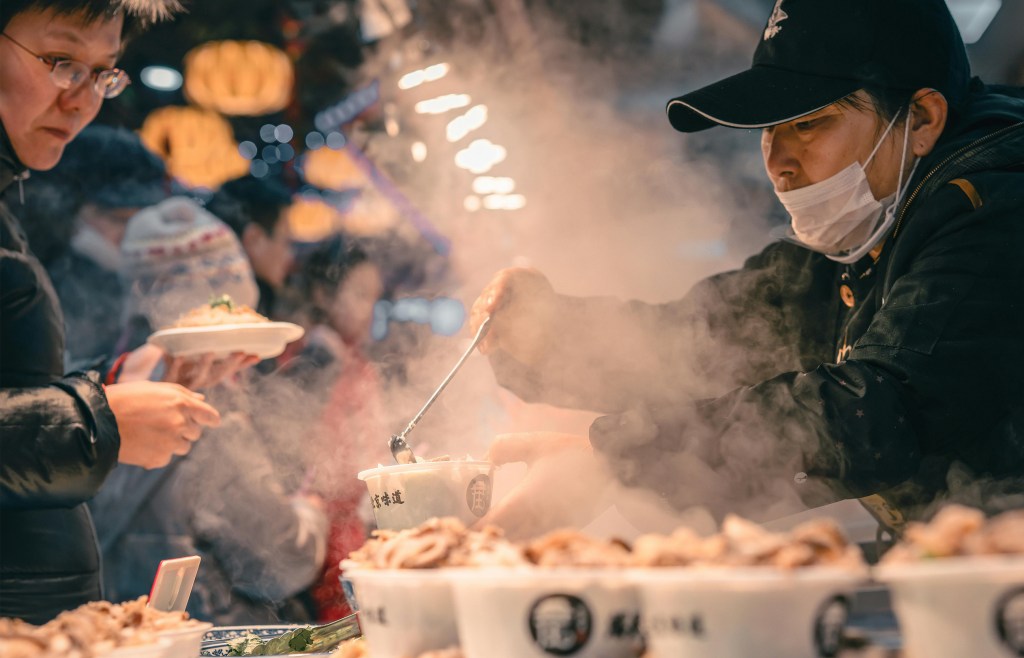
You can eat incredibly well in China, but a few precautions help. Tap water is not safe to drink, so always stick to bottled or boiled water. Most hotels provide kettles in rooms.
For street food, follow the busy stalls with high turnover. Freshly cooked dishes are safer. If you don’t eat spicy food, learn to say bú là (不辣) or shǎo là (少辣) for “not spicy” or “less spicy.”
If you’re like me and can’t handle cilantro, know that it’s common in Chinese cooking, especially in noodle soups and cold dishes. To ask for no cilantro, say bù yào xiāng cài (不要香菜).
Bring a small travel pharmacy with rehydration salts, pain relievers, and basic stomach medicine. Common meds can be harder to find in smaller cities.
👉 Our tip: If you have allergies or food sensitivities, print a Chinese translation card listing them. It makes ordering food much easier.
7. Festivals and Crowd Planning 🎉
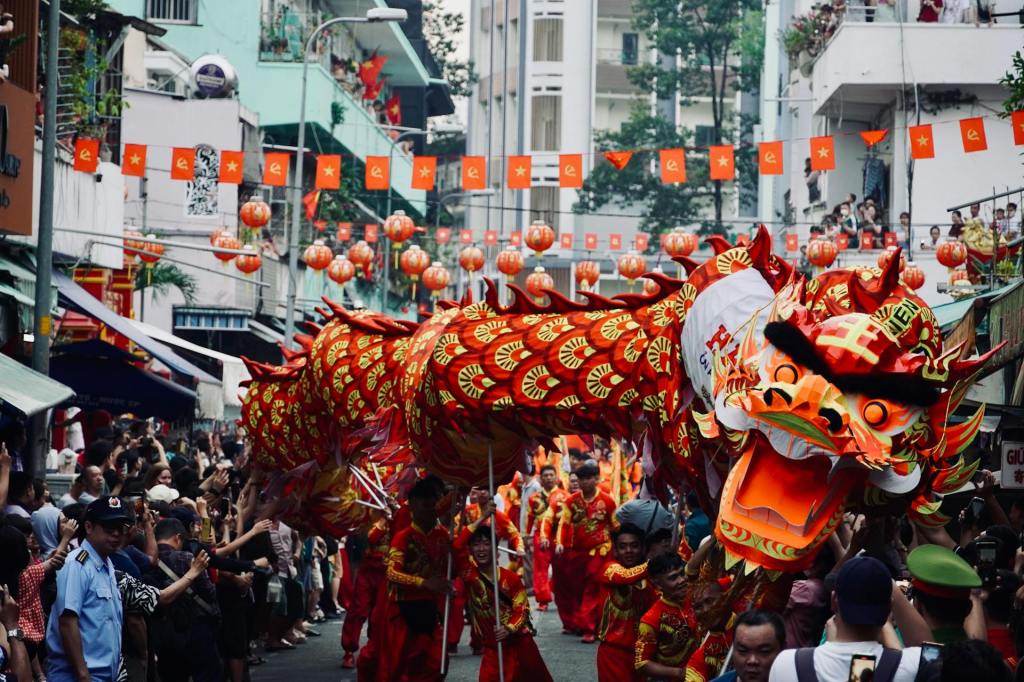
Travel timing makes a huge difference in China. Chinese New Year (late January–February) is the biggest holiday, with most businesses closed and train tickets sold out. Golden Week (October 1–7) is another peak period, with massive crowds and high prices.
Other holidays like May Day and Mid-Autumn Festival also bring crowds, but they’re shorter. Visiting outside these dates means cheaper hotels, less crowded trains, and easier access to popular attractions.
👉 Our tip: If you must travel during peak holidays, visit big sights first thing in the morning or book timed-entry tickets online.
8. Useful Chinese Phrases 🗣️
Learning a few phrases helps a lot. Here are the most useful:
- Hello: nǐ hǎo (你好)
- Thank you: xièxiè (谢谢)
- How much is this?: zhè ge duō shǎo qián (这个多少钱)
- Not spicy please: bú là (不辣)
- Where is the bathroom?: xǐ shǒu jiān zài nǎ lǐ (洗手间在哪里)
- Please use the meter: qǐng dǎ biǎo (请打表)
👉 Our tip: Save these in a note with large text on your phone. If pronunciation fails, just show the screen.
9. Tech and Apps You Will Actually Use 📱
Download and set up apps before you land. WeChat is essential for messaging and payments. Alipay also works for QR code payments at shops and restaurants.
For navigation, Baidu Maps or Amap (Gaode) are more accurate than Google Maps. For bookings, Trip.com is the easiest way to buy train and flight tickets in English.
Having a Chinese phone number also makes life easier. Some apps, hotel bookings, and even Wi-Fi logins work more smoothly if you can register with a local number. We plan to set up one SIM with a Chinese number for verification and one data-only SIM for backup.
Language tools like Pleco are great for dictionary and menu translation. And for rides, Didi works just like Uber.
👉 Our tip: Save your hotel address in Chinese in both WeChat and your maps app. It’s the easiest way to get back.
10. Other Everyday Surprises in China 🌆
- Staring: Foreigners often get stared at, especially outside major cities. It’s usually curiosity, not rudeness.
- Noise levels: Cities can feel very loud — horns, loudspeaker announcements, people talking on speakerphone — it’s part of daily life.
- Smoking indoors: While officially banned in many places, you may still see people smoking in restaurants or bathrooms.
- Spitting in public: Still common, though less than before. It can surprise first-time visitors.
- Lively nights: Even late in the evening, you’ll see families, kids, and grandparents outside in parks or plazas.
- Restaurants closing early: Many spots shut down by 9–10 pm, especially in smaller cities, so late-night eats aren’t always guaranteed.


 chasingthechungs.com