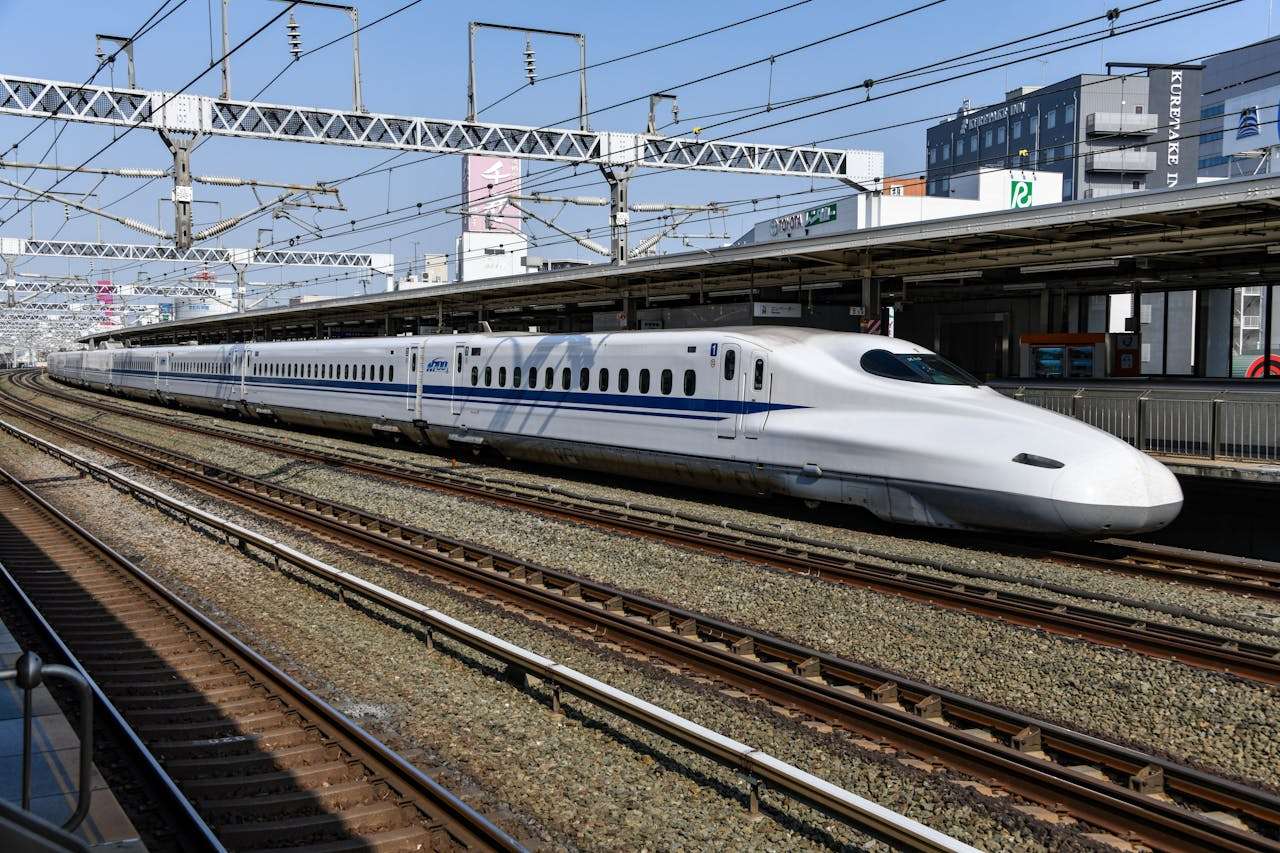
Japan Is Offering Free Bullet Train Tickets — And It’s the Push You Need to Explore Kyushu
Kyushu travel planning just got a serious boost. Japan’s southernmost main island is offering free Shinkansen bullet train tickets for foreign tourists on the Fukuoka to Kagoshima route — and even if you miss the free ticket window, Kyushu deserves a spot on your Japan itinerary. We spent time in Fukuoka during our 202 days across Asia and it was one of the best decisions we made. Here’s everything you need to plan a Kyushu trip, including how the free ticket deal works.
Kyushu Travel: What Makes This Island Different
While Tokyo, Kyoto, and Osaka absorb the majority of Japan’s tourist traffic, Kyushu sits to the southwest doing its own thing — with a fraction of the crowds, none of the tourist fatigue, and a food scene that legitimately rivals anywhere else in the country. Japan’s third-largest island is genuinely underrated, and the gap between what it offers and how many people visit is one of the biggest mismatches in Asia travel right now.
A few things that set Kyushu apart for Kyushu travel:
- Sakurajima: an active volcano that rains ash on the city of Kagoshima. You can take a ferry across and walk right up to the lava fields.
- Ibusuki sand baths: naturally heated volcanic sand buries you up to the neck. One of the strangest, most relaxing things we’ve done in Japan.
- Yakushima Island: ancient cedar forests that directly inspired Studio Ghibli’s Princess Mononoke. The trees are genuinely prehistoric.
- Beppu: the hot spring capital of Japan, with more onsen than anywhere else in the country and “hell tours” that show boiling mud pools, geyser baths, and blood-red water.
- Fukuoka: closer to Seoul than to Tokyo, with a street food scene (the yatai stalls along the canal) that we’d return for alone.
The Free Shinkansen Ticket Deal: What You Need to Know
Kagoshima Prefecture is subsidizing one-way Shinkansen tickets for foreign tourists on the Fukuoka (Hakata Station) to Kagoshima-Chuo route. Here’s the breakdown:
- Route: Fukuoka (Hakata) → Kagoshima-Chuo Station
- Journey time: 90 minutes on the Mizuho/Sakura Shinkansen
- Ticket value: ~¥10,900 (~$100 CAD)
- Currently eligible: South Korea, Taiwan, China, Hong Kong
- North America: Expansion is planned. No confirmed date yet.
When it opens to Canadians, the application process runs through the official Kagoshima tourism site. We’ll update this post the moment it’s available for North American travelers.
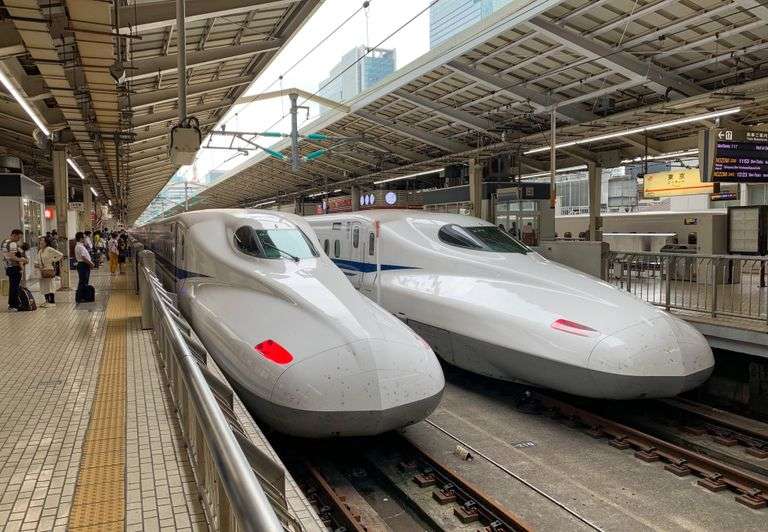
Even without the free ticket, this Shinkansen route is one of the most scenic in Japan — and if you have a JR Pass, the entire Kyushu leg is fully covered.
Fukuoka: The Best Base for Kyushu Travel
Start your Kyushu trip in Fukuoka. It’s the largest city on the island, the main transport hub, and has one of the best food cultures in Japan. Fukuoka is closer to Seoul than it is to Tokyo — a fact that shapes how the city feels. It’s compact, walkable, and completely lacking in the tourist-crowd energy you get in Kyoto.
What to do in Fukuoka:
- Hakata ramen: thin noodles, pork bone broth, and a bowl that looks simple but takes 12 hours to make. Ichiran and Shin-Shin are the benchmarks, but the best bowls are at unmarked counters in the Nakasu area.
- Yatai stalls: open-air food stalls along Nakasu and Tenjin that operate from evening into late night. Yakitori, ramen, mentaiko — order a few small plates and move between stalls.
- Ohori Park: a massive lake in the center of the city. Worth a morning walk before the heat hits in summer.
- Dazaifu Tenmangu: one of the most visited shrines in Japan, 30 minutes from Fukuoka by train. The surrounding shops sell Fukuoka’s famous umegae mochi rice cakes.
Where to stay in Fukuoka: The Hakata and Tenjin areas are most convenient. Mid-range business hotels run ¥8,000–15,000 per night. We stayed near Hakata Station and it was ideal for early morning train departures to Beppu and beyond.
Beppu and Yufuin: Kyushu’s Hot Spring Heartland
Beppu is the onsen capital of Japan by volume — more hot springs here than anywhere else in the country. It’s about 2 hours from Fukuoka by train on the Sonic Express. The “Jigoku Meguri” (Hell Tour) takes you through nine dramatically different geothermal pools: blood-red, bright blue, boiling grey mud, and one with a small crocodile enclosure that’s as bizarre as it sounds.
Yufuin is a quieter alternative 30 minutes inland from Beppu — a small resort town with ryokans, boutique shops, and Lake Kinrin as its centerpiece. Visit on a weekday to avoid the weekend crowds that flow in from Fukuoka.
Onsen tip: book a private bath (kashikiri) at your ryokan rather than the public bath if you want an uninterrupted experience. Rates for private baths run ¥2,000–4,000 per 45 minutes.
Kagoshima and Sakurajima: The Volcano City
Kagoshima sits directly across a bay from Sakurajima, one of Japan’s most active volcanoes. The ferry runs every 15 minutes and costs ¥160 — less than $2 CAD. Once you’re on the island, you can walk lava fields, stand at observation points with ash warnings, and get as close to active geology as you’re ever likely to get.
The city itself is worth a full day: the Sengan-en garden (a UNESCO World Heritage site), the Shoko Shusei Museum, and a local food culture built around Kurobuta pork and sweet potato shochu that’s distinct from anything in central Japan.
Getting from Fukuoka to Kagoshima: 90 minutes on the Mizuho Shinkansen. The free ticket (when available) covers exactly this route — Hakata to Kagoshima-Chuo.
How Long Do You Need for Kyushu Travel?
A minimum Kyushu trip is 4–5 days: two in Fukuoka, one in Beppu/Yufuin, one in Kagoshima, with a possible half-day on Sakurajima. A full week lets you add Nagasaki (the most historically significant city on the island), Kumamoto Castle (rebuilt after the 2016 earthquake), and a side trip to Yakushima if the ancient forests are on your list.
Kyushu pairs well with a longer Japan itinerary. We’d fly into Tokyo, spend a week in Honshu, then take the Shinkansen down to Fukuoka and work through Kyushu before flying home from Fukuoka Airport. The routing is logical and avoids backtracking.
Practical Kyushu Travel Information
Getting to Fukuoka: Direct flights from major Canadian cities via Tokyo (Haneda/Narita), then Shinkansen or domestic flight to Fukuoka. From Tokyo to Hakata by Nozomi Shinkansen: ~5 hours, ¥23,000 (~$210 CAD) or covered by JR Pass.
Getting around Kyushu: The JR Kyushu Shinkansen and limited express network covers all major cities. A JR Kyushu Rail Pass (3 days ~¥15,000, 5 days ~¥18,000) makes sense if you’re moving between Fukuoka, Beppu, and Kagoshima. Check the JR Kyushu official site for current pass pricing.
Best time to visit: Spring (March–May) and autumn (September–November) are ideal. Summer is hot and humid. Winter is mild compared to central Japan, which is a bonus for anyone sensitive to cold.
Currency: Cash is still king in many parts of Kyushu. Carry yen for smaller restaurants, ryokans, and the ferry to Sakurajima. IC cards (Suica/ICOCA) work on trains and convenience stores throughout.
We’ll post the moment the free Shinkansen ticket program opens to Canadians. Follow us on Instagram at @chasing.jenny or subscribe on YouTube for the update the day it lands. And if you’re planning the broader Japan trip, our Japan Rail Pass guide and Japan shopping discount coupons post are good starting points.



This is exactly the kind of content I was hoping to find.
The site as a whole is remarkably helpful.
Thank you so much! That genuinely means a lot to us. We put a lot into making the site useful, so it’s great to hear it’s hitting the mark. Hope it helps you plan an amazing trip!