🇹🇭 Sticky Waterfalls: A Chiang Mai Adventure Worth Climbing?
If you’re looking for one of the most unique outdoor adventures near Chiang Mai, the Bua Thong waterfalls Chiang Mai deserve a spot at the very top of your list. Also called Sticky Waterfalls, these calcium-rich cascades let you walk straight up the rock face without slipping — no ropes required. We visited on a combo day tour after a morning at the elephant sanctuary, and it turned into one of our favorite days in all of Thailand. Watch our full experience in the video below, then read on for everything you need to plan your visit.
What Are the Bua Thong Waterfalls (Sticky Waterfalls)?
The Bua Thong waterfalls Chiang Mai are a series of travertine cascades located in Mae Taeng District, about 70 km north of Chiang Mai city center. “Bua Thong” translates roughly to “golden lotus,” and the falls sit within the Doi Chiang Dao Wildlife Sanctuary — a protected natural area rich in jungle, limestone formations, and wildlife.
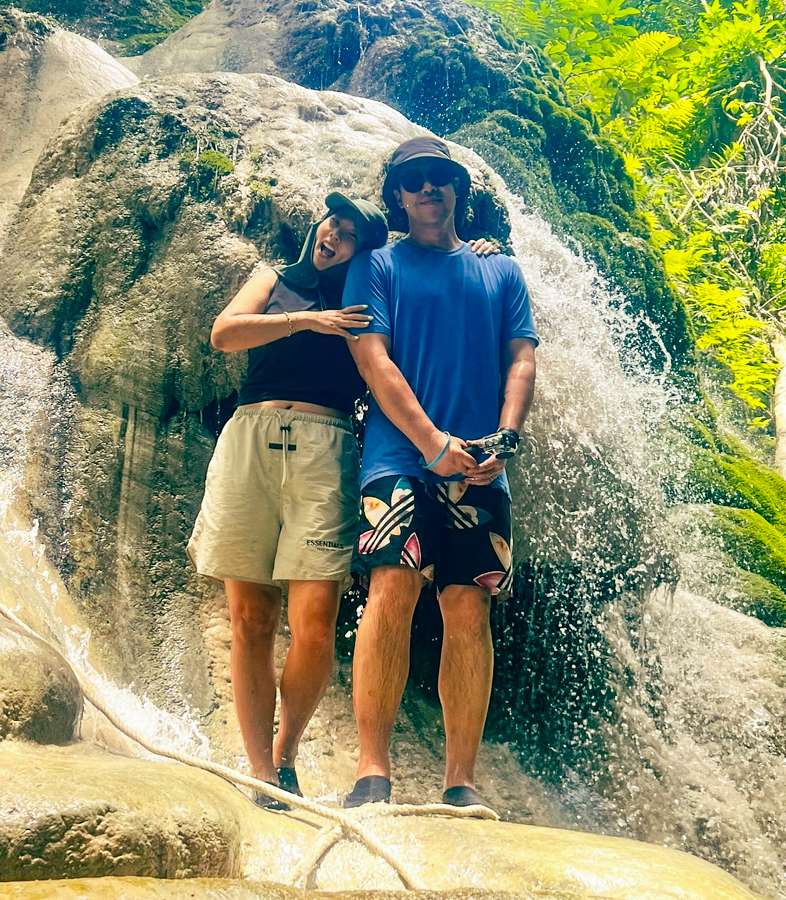
What makes them genuinely unlike any other waterfall in Southeast Asia is the rock composition. The water flows over limestone and calcium carbonate deposits that create a naturally textured, porous surface. That texture grips your feet like a trail shoe on dry rock — even with water actively flowing over it. You won’t slip. It sounds impossible until you’re actually standing there, feet flat on wet rock mid-stream, completely stable.
The falls stretch across multiple tiers, and visitors can climb from the base all the way to the top. No harness, no guide, no climbing experience needed. Families with young kids tackle these falls. Couples in their 60s tackle these falls. Anyone can do it, and that’s a big part of what makes Bua Thong so special.
Why Visit Bua Thong Waterfalls Chiang Mai
Here’s what sets Sticky Waterfalls apart from every other waterfall day trip out of Chiang Mai:
It’s genuinely interactive. Most waterfalls, you stand nearby and look. Here, you’re in them — climbing them. You’re standing mid-stream with water rushing past your feet while you walk calmly upward. It’s a different category of experience entirely.
It’s not overrun with tourists. Bua Thong doesn’t attract the same crowds as Doi Inthanon or the city’s night markets. You’ll mostly share it with Thai families and a handful of visitors in the know. The atmosphere is relaxed and local.
It works for all fitness levels. The rocks do the work. You don’t need to be athletic, coordinated, or experienced. We watched kids half our age race past us on the way up and couples making their way steadily with big smiles. If you can walk, you can climb Bua Thong Waterfalls Chiang Mai.
The surroundings are beautiful. Even if you skip the climbing, the jungle setting is gorgeous. Cool mist, rushing water, green canopy — it’s a great escape from Chiang Mai’s heat and city noise.
How to Get to Bua Thong Waterfalls from Chiang Mai
Distance: About 70 km north of Chiang Mai city center
Drive time: Approximately 1.5 hours each way
Address: Mae Ho Phra, Mae Taeng District, Chiang Mai 50150
Option 1: Join a combo tour (what we did)
We booked a combo day tour that included a morning at an ethical elephant sanctuary in Chiang Mai followed by the Sticky Waterfalls in the afternoon. The convenience is worth it — no navigation stress, no rental vehicle, and you travel with a small group. Many tours depart from the Chiang Mai city center early in the morning and return by late afternoon. Expect to pay 1,500–2,500 THB per person depending on what’s included.
Option 2: Rent a scooter or car
If you’re comfortable on a motorbike, you can rent a scooter in Chiang Mai and make the scenic 1.5-hour ride north. The route passes through Mae Rim and Mae Taeng, which are worth exploring along the way. Scooter rental typically costs 150–250 THB per day.
Option 3: Hire a private driver
Private driver services from Chiang Mai to Bua Thong are available through your guesthouse, hotel, or apps like Grab. Expect to pay 1,200–2,000 THB for a round trip with waiting time.
Option 4: Songthaew and motorbike taxi
Local red songthaews don’t run directly to Bua Thong, but you can take one toward Mae Taeng and arrange a motorbike taxi for the final stretch. This is the cheapest option but requires the most planning — not ideal if you’re short on time.
What to Expect at the Sticky Waterfalls
Entrance and facilities
The entrance to Bua Thong Waterfalls is free for Thai nationals. Foreign visitors pay a small fee, typically around 20–50 THB. The site has basic facilities including changing rooms, restrooms, and small food stalls near the car park selling snacks, drinks, and simple Thai food.
The climb
The waterfalls are divided into multiple tiers. Most visitors start at the base and work their way up. Safety ropes hang alongside the falls, but you honestly may not need them — the grip is that good. We climbed all the way to the top and looked down at the jungle below. It took us about 30 minutes at a relaxed pace, with plenty of stops for photos and laughs.
Go slow on the way down. The rocks are grippy going up, but coming down requires more care since your body weight shifts differently on a descent. Take it one step at a time and you’ll be completely fine.
Water temperature
The water is refreshingly cool — a welcome contrast to Thailand’s heat. Many visitors wade into the pools between tiers to cool off. Pack a small dry bag if you want to keep your phone accessible.
Best time to visit
Aim for a weekday morning to beat the crowds. The dry season (November to April) offers the most comfortable weather. During the rainy season (June to October), the falls run stronger and the jungle looks lush and vivid — just be aware that the surrounding ground can be muddy and slippery.
What to Pack for Bua Thong
Keep it simple:
- Water shoes or old trainers you don’t mind getting soaked
- A change of dry clothes
- A small waterproof bag for your phone
- Sunscreen — you’ll be in open sun on the upper tiers
- Snacks (the food stalls at the base are basic)
- Cash in Thai Baht — entrance fee and food stalls are cash only
Don’t wear flip flops or sandals. They fill with water and make the descent unpredictable. Bare feet actually work surprisingly well, but secure water shoes are the best choice overall.
Nearby Attractions to Combine with Your Visit
Bua Thong is located north of Chiang Mai in the Mae Taeng corridor — the same area where many of the city’s most popular day trips concentrate. Here’s what pairs well:
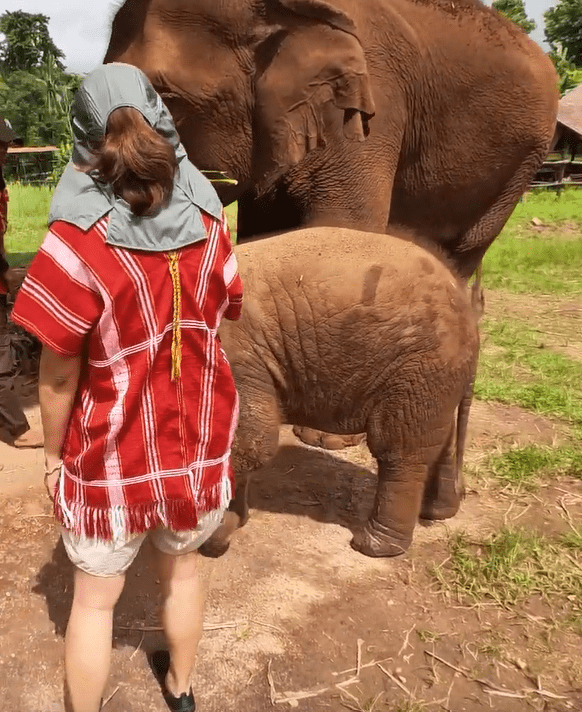
Elephant sanctuaries: The Mae Taeng area is home to several ethical elephant experiences. We spent the morning at Bamboo Elephant Family Care before heading to Bua Thong in the afternoon, and the combination made for a perfect full day out of the city. Read about our experience at the sanctuary here.
Chiang Dao Cave: About 30 km further north, Chiang Dao is a vast cave complex inside a dramatic limestone mountain. Worth the detour if you’re already making the drive.
Doi Chiang Dao: Thailand’s third-highest mountain, with excellent birdwatching and trekking trails. If you’re a hiker, it’s worth an overnight stop.
If you’re still planning your time in the city itself, check out our guide to the perfect Chiang Mai day out — covering local food, coffee, shopping, and the night market.
Tips for Making the Most of Your Visit
A few things we wish we’d known before we went:
- Start early. Aim to arrive by 9 am to beat the midday heat and weekend crowds.
- Climb to the top. Don’t stop at the first tier. The view from the top is worth every step.
- Trust the rock. You’ll instinctively want to grab for ropes or brace yourself. Trust your feet — the grip is real.
- Take the descent slowly. The rocks are grippy going up; coming down is where most people get nervous. Move deliberately and you’ll be fine.
- Stay for lunch. The stalls near the car park sell som tam, grilled pork, and sticky rice. Fresh, cheap, and exactly what you want after climbing.
- Book a combo tour if logistics stress you out. The time saved on planning is worth more than the premium you pay over going independently.
Are the Bua Thong Waterfalls Worth It?
Without question. The Bua Thong waterfalls Chiang Mai experience is one of those rare travel moments that surprises you — something that sounds fun on paper but delivers something better in person. The sensation of walking up an active waterfall without slipping has to be felt to be understood. You’ll be laughing at yourself the whole time, wondering why you kept expecting to fall and never did.
Whether you’re visiting Chiang Mai for a week or just passing through, this is worth the half-day out of the city. Combine it with an elephant sanctuary visit, pack a change of clothes, and give yourself the full morning at the falls. You won’t regret it.